His Wife Disappeared During Their Honeymoon — 19 Years Later, She Called With a Secret
The last ordinary day of Michael Harper’s marriage began in a way no one would ever remember as dangerous.
In October of 2006, Michael was 28 years old, a young contractor from Atlanta, Georgia, trying to build a modest construction business with the same patience his father had taught him.
He was not wealthy, not famous, and not the kind of man people noticed immediately in a room.
But to those who knew him, Michael was dependable.
He paid his bills on time, kept his promises, called his parents every Sunday, and believed that if a person worked hard enough, life would eventually become steady.
Sarah Collins was 26, a second grade teacher at a public elementary school outside Atlanta.
Her students loved her because she remembered small things: birthdays, missing teeth, favorite books, which children were afraid to read aloud, which children needed extra kindness on Monday mornings.
Her colleagues described her as gentle but not weak, quiet but never cold.
She had the kind of goodness people trusted without needing proof.
Michael and Sarah had known each other for years before becoming a couple.
They shared friends, church gatherings, weekend cookouts, and the kind of ordinary southern community where everyone seemed to know whose truck was parked outside whose house.
Their relationship did not begin like something from a movie.
It grew slowly through grocery store conversations, family dinners, school events, and long discussions about what kind of life they wanted.
After two years together, marriage felt less like a dramatic decision and more like the next honest step.
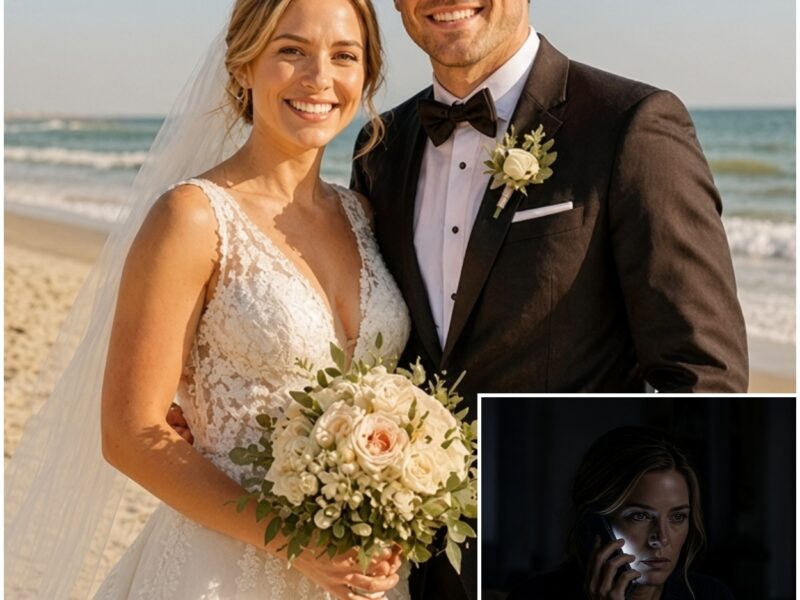
Their wedding took place in Atlanta on a mild October afternoon.
It was held in a small Protestant church where Sarah had once helped organize a children’s charity drive, followed by a reception at a local event hall decorated with simple flowers, white tablecloths, and photographs from their dating years.
More than 100 guests attended, relatives from Georgia and the Carolinas, teachers from Sarah’s school, contractors who worked with Michael, old college friends, neighbors, and members of their church.
Everyone who came that day saw what they expected to see.
Two decent young people beginning a life together.
Sarah was the beloved school teacher.
Michael was the hard-working young husband.
Their future seemed easy to imagine.
A small house outside Atlanta.
Children someday.
Sunday dinners with family.
Summer trips to the coast.
Bills, work, arguments, forgiveness, holidays, and all the ordinary things that make a marriage real.
Among the guests was Michael’s older brother, David Harper.
David was 36, eight years older than Michael, and still unmarried.
He had always been more private than his younger brother, the kind of man relatives described as difficult to read.
Their parents worried about him in the gentle but persistent way American parents often worry about an adult son who lives alone too long.
David had a stable job, a clean reputation, and enough charm to seem harmless when he chose to use it.
On the wedding day, he was simply the older brother offering congratulations.
Another familiar face in a family photograph no one would later be able to look at the same way.
After the wedding, Michael and Sarah chose Myrtle Beach, South Carolina for their honeymoon.
They did not choose it because it was extravagant.
They chose it because it was reachable, familiar, and comfortably American.
Many newly married couples from the South spent their early vacations there.
It had oceanfront hotels, seafood restaurants, souvenir shops, family attractions, and just enough distance from home to feel like an escape without feeling impossible to afford.
They booked three nights at an oceanfront resort near the central tourist district.
It was meant to be simple.
4 days away from work, school, family calls, thank you notes, and the pressure of beginning married life.
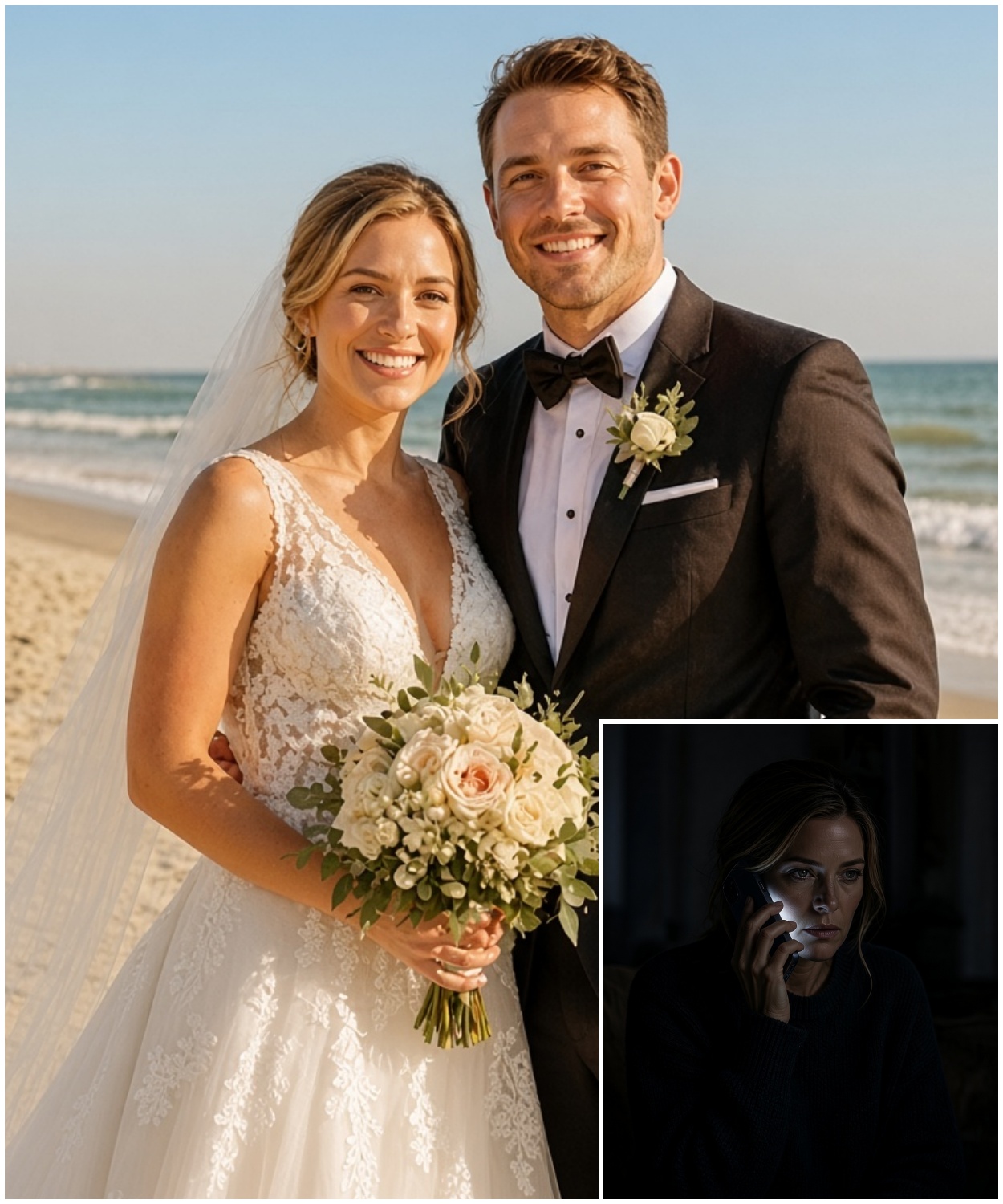
Michael had promised himself that for those few days he would not think about contracts, invoices, crew schedules, or the endless uncertainty of running a small business.
Sarah had promised herself she would not think about lesson plans, parent emails, classroom supplies, or the stack of papers waiting for her back at school.
The first two days were exactly what people imagine when they think of a honeymoon that does not need luxury to feel special.
They ate at crowded restaurants where vacationing families waited with pagers near the entrance.
They visited shops filled with postcards, beach towels, and cheap picture frames.
They took pictures with a small digital camera Sarah had bought before the wedding because she wanted their first trip as husband and wife to be saved carefully.
She liked photographs not because they made life perfect, but because they helped ordinary moments last a little longer.
By the third day, October 12th, everything still appeared normal.
They had breakfast at the hotel and talked about returning to Atlanta soon.
Their apartment was waiting.
Wedding gifts still needed organizing.
Sarah wanted to choose which thank you cards to send first.
Michael was already thinking about a construction project scheduled for the following week, though he tried not to mention it too much.
That morning, Sarah wore a simple white dress for a small honeymoon photo session arranged through a local beach photographer.
It was not a grand wedding shoot, only a common service offered to couples visiting Myrtle Beach.
But to Sarah, it mattered.
She wanted photographs that felt separate from the formal church wedding, something softer and more personal, something they could hang in their future home as a reminder of where their married life had begun.
Michael would later remember those photographs with a pain he could never fully explain.
In them, Sarah still belonged completely to the life they had planned.
She was the young wife from Atlanta, the teacher who wanted children of her own someday, the woman who had spoken about curtains, kitchen plates, school vacations, and framed pictures on the wall.
Nothing in those images suggested that within hours she would become the center of a mystery that would follow him for nearly two decades.
That afternoon, they spent more time around Myrtle Beach, moving through the final full day of their honeymoon with the quiet satisfaction of people who believed tomorrow would be ordinary.
They bought small souvenirs, discussed what to bring home for Michael’s parents, and talked about which wedding photographs their families would want printed.
Sarah mentioned again that she wanted a large photo from the beach session for the living room in Atlanta.
In the evening, they went to a well-known seafood restaurant popular with tourists.
Sarah rarely drank much, but that night she had a few glasses of white wine.
There was no argument, no visible fear, no sign of a plan falling apart.
To anyone nearby, they would have looked like a typical newlywed couple at the end of a short beach honeymoon.
Tired, content, and ready to return to the life waiting for them back home.
A little after 9 that night, Michael and Sarah returned to their hotel.
The day had been full, but not unusual.
Their bags were in the room.
Their rental car was parked outside.
Their new marriage, at least from the outside, was still untouched by disaster.
In the room, they reviewed the photographs from the day.
Sarah liked the beach pictures most.
She talked about printing them, framing them, and placing them in the apartment they had prepared together.
Michael listened as a husband who believed he had many years ahead to hear the same voice talk about small plans.
Neither of them knew that those ordinary sentences would later become some of his last clear memories of her.
Near midnight, Sarah said she had a headache.
It did not seem alarming at first.
The day had been long, the restaurant had been crowded, and the wine may have been more than she was used to.
Michael checked with the hotel about finding medicine nearby, but at that hour, most places in the area were already closed.
Sarah decided rest would be enough.
That night, nothing about the room suggested that it was about to become the beginning of a national missing person nightmare.
There was no broken door, no warning message, no obvious threat, no stranger waiting in the hallway, no sign that another life was pressing in on theirs from the dark edges of the past.
To Michael, it was still only the third night of his honeymoon.
By morning, it would become the night he would spend the next 19 years trying to understand.
Around midnight, the honeymoon still belonged to ordinary life.
Michael Harper would later replay that hour more times than he could count.
Not because anything dramatic happened, but because nothing did.
That was what made it impossible to accept.
There had been no shouting, no slam door, no strange call he remembered hearing, no sudden confession, no sign that Sarah was afraid of anyone.
The room held the harmless remains of a newly married couple’s final full day at the beach, folded shopping bags, a restaurant receipt, the small digital camera Sarah had used all afternoon, and a stack of plans waiting for them back in Atlanta.
Sarah’s headache seemed minor at first to fit the day too easily.
They had been outside for hours, eaten late, talked too much, and she had drunk more wine than usual at dinner.
Michael called the front desk to ask whether any pharmacy nearby might still be open.
The answer was polite but unhelpful.
At that hour, most of the closest stores had already closed, and the nearest 24-hour option was far enough away that it hardly seemed worth the trip for a simple headache.
Sarah told him rest would be enough.
There was nothing in that decision that felt important.
Couples make choices like that every day.
A headache, a closed pharmacy, an early morning drive home soon, and the belief that sleep could solve what medicine could not.
Michael accepted it because it sounded reasonable because Sarah had always been practical and because he had no reason to believe that this small moment would one day become part of a police timeline.
For the rest of his life, he would remember the terrible unfairness of that.
Some tragedies arrive with warnings.
This one hid behind normal things.
Sometime around 3:00 in the morning, Michael woke and realized Sarah was not beside him.
At first, the thought did not carry fear.
In a hotel room in the middle of the night, people wake up for ordinary reasons.
A glass of water, a headache that will not fade, a trip to the bathroom, a restless moment after too much wine and too little sleep.
Michael waited for those ordinary explanations to make sense.
They did not.
The bathroom was empty.
The small sitting area was empty.
The balcony was empty.
Nothing in the room offered a simple answer.
Sarah was not there.
Then the details began turning strange.
Her purse was still in the room.
Inside it were the things no adult woman traveling away from home would normally leave behind.
wallet, driver’s license, credit cards, cash, lip balm, receipts, and the small ordinary items she carried everywhere.
Her cell phone was still there, too.
So were the rental car keys.
Her wedding ring had been left behind.
A detail so intimate that it made the entire situation feel wrong in a way Michael could not immediately put into words.
The hotel room did not look like a place someone had fled in a panic.
It did not look like a place where a stranger had dragged someone away.
There was no obvious sign of a fight.
No broken lock, no scattered belongings that suggested a struggle.
Everything was too still, too complete, too carefully unchanged.
The most disturbing detail was her sleepwear.
It was still in the room.
That question would become one of the first questions investigators asked and one of the last questions Michael could ever stop hearing.
If Sarah had left the room on her own, what had she been wearing? If someone had taken her, how had it happened without evidence? If she had walked out, why had the cameras not captured her? If she had not walked out, where had she gone? Michael contacted the front desk, and within a short time, the hotel staff became involved.
At first, the situation still carried the thin hope of misunderstanding.
Maybe Sarah had gone to the lobby and someone had missed her.
Maybe she was in another part of the building.
Maybe she had become confused from the headache and wandered somewhere inside the resort.
Maybe there was one simple explanation that had not yet been found.
The search widened quickly through the hotel.
The lobby, hallways, elevators, vending areas, restaurant space, pool area, service corridors, and parking lot were checked.
Nothing connected to Sarah appeared.
No guest reported seeing a young woman matching her description.
No staff member remembered speaking with her after midnight.
No one had found a lost phone, a wallet, a shoe, a dress, or any sign that she had passed through the public areas.
By around 4 in the morning, the situation could no longer be treated as a confused guest wandering a resort.
The police were called.
When officers arrived, the case began as a missing person report, but the circumstances immediately made it unusual.
Sarah Harper was not a teenager who had run away from home.
She was not someone traveling alone.
She was a newlywed on her honeymoon, missing from a hotel room where her belongings remained untouched.
Her husband had no record of violence, no visible motive, no immediate explanation, and no useful timeline beyond the fact that Sarah had been in the room before sleep and gone when he woke.
The first hours mattered, and everyone knew it.
Officers gathered the basic facts.
Full name, age, height, recent clothing, health conditions, last known activities, alcohol consumed, emotional state, family contacts, and any possible reason she might leave voluntarily.
Michael gave them what he knew.
Sarah was 26.
She was a teacher.
She had no known enemies.
She had not spoken of leaving.
She had not been depressed in any way he understood.
She had been tired and had a headache.
She had planned to return to Atlanta with him.
The hotel’s surveillance system became the center of attention.
In a resort with cameras at the main entrance, lobby, elevator areas, and parking zones, it seemed unlikely that Sarah could simply vanish without appearing somewhere.
Investigators reviewed the footage from the hours after Michael and Sarah returned from dinner.
They found the couple returning to the hotel earlier that night.
After that, nothing showed Sarah leaving through the main public areas.
The front entrance was staffed.
The lobby camera had been working.
The elevators were monitored.
The parking lot showed no clear sign of her.
There was no clip of Sarah walking out.
No image of her speaking with anyone.
No footage of a stranger escorting her away.
The electronic keycard records deepened the mystery.
According to the system, the room had not been opened again after the late night period when Michael and Sarah were already inside.
There was no record of Sarah using the key card to leave and re-enter.
There was no evidence that another guest key had accessed the room.
The door history did not match any simple version of the story that left investigators with a problem that seemed almost impossible.
Sarah was gone, but the room did not explain her disappearance.
The cameras did not show her leaving.
The key card records did not show a normal exit.
Her personal items remained behind.
The hotel had no witness.
The husband had awakened to an empty space and a life that no longer made sense.
As dawn approached, the search expanded beyond the building.
Officers and hotel staff checked the immediate area around the resort.
Then the beach access points, walkways, nearby roads, and businesses that might have still been open.
The possibility of an accident near the water had to be considered because the resort sat close enough to the shoreline for that theory to seem plausible, but there was no reliable sign that Sarah had gone that way.
No one wanted to say the obvious too early, but the case had already turned from frightening to deeply disturbing.
A woman who had been married for only a few days had disappeared from a locked hotel room in the middle of the night while leaving behind everything she would need to survive outside it.
By sunrise, Michael was no longer a husband on his honeymoon.
He was the husband of a missing woman.
The official report would say that Sarah Harper disappeared in Myrtle Beach, South Carolina during the early morning hours of October 12th, 2006.
It would list the facts in clean sentences the way reports always do.
It would mention the hotel, the belongings, the lack of surveillance footage, the absence of confirmed witnesses, and the ongoing investigation.
But no report could capture what the first morning truly meant.
For the police, it was a case.
For the hotel, it was a crisis.
For Sarah’s family, it was the beginning of terror.
For Michael, it was the moment the life he had imagined in Atlanta stopped moving forward and became fixed forever inside one impossible question.
How could Sarah have vanished without leaving the room, without taking her things, without appearing on camera, and without giving him a single reason to believe she would ever choose to disappear? Michael did not leave Myrtle Beach when the honeymoon ended.
The reservation was over.
The bags should have been packed, and by every ordinary expectation, he should have been driving back to Atlanta with his wife beside him, carrying home photographs, receipts, souvenirs, and the first private memories of married life.
Instead, he remained in South Carolina with a police case number, a hotel room full of unanswered questions, and a name that began appearing on missing person flyers before his marriage had even settled into reality.
The first days were treated with urgency.
Local police continued reviewing hotel records, surveillance footage, guest lists, employee schedules, maintenance access logs, and every possible point of entry or exit connected to the resort.
Officers spoke with guests who had stayed on the same floor, staff members who had worked overnight, restaurant employees, security personnel, taxi drivers, and anyone who might have noticed a young woman alone after midnight.
The questions were direct and repetitive because they had to be.
Had anyone seen Sarah Harper? Had anyone heard anything unusual? Had any vehicle left the property at a strange hour? Had any employee opened a service entrance? Had any guest reported something suspicious and then dismissed it? No answer changed the case.
Sarah had been in the room with Michael late on the night of October 11th.
By the early morning hours of October 12th, she was gone.
Her purse, phone, wallet, identification, rental car keys, and wedding ring remained behind.
The public cameras did not show her leaving.
The room records did not show a normal exit.
Those facts were repeated so often that they began to feel less like clues and more like walls.
Search teams moved through the areas around the hotel and nearby beach access points.
Volunteers joined when Sarah’s disappearance reached local news.
Her face was printed on flyers and posted in places tourists and workers might see.
Convenience stores, gas stations, hotel counters, diner bulletin boards, beach shops, church entrances, laundromats, and roadside stops along the route out of town.
The flyers used one of the recent photographs from the honeymoon because it was the clearest image available.
That made the case even harder for strangers to ignore.
Sarah did not look like an old cold case photo.
She looked like a young bride whose life should still be happening.
Michael stayed through it all.
He answered the same questions from police, then from Sarah’s parents, then from reporters, then from relatives who called because they had seen something online or on a local broadcast.
He gave the same timeline again and again.
Dinner, hotel, photographs, headache, front desk, sleep, waking up, empty room, belongings left behind.
Every retelling made the facts sound more impossible, but there was nothing else to say.
At first, investigators considered the possibility of an accident.
Myrtle Beach was close to the ocean, and accidental drownings were not unheard of in coastal communities.
If Sarah had become disoriented from a headache, alcohol, exhaustion, or some medical problem, perhaps she had left the room and wandered toward the water.
It was a theory that gave people something simple to hold on to because accidents require no villain and no hidden motive.
But the theory collapsed under its own questions.
Sarah had left behind everything she would normally carry.
She had not been captured by the lobby cameras.
There was no confirmed route from the room to the beach that explained the missing footage.
No witness placed her near the water.
No clothing, no phone, no personal item.
No clear physical trace appeared where it should have if she had simply wandered outside.
Michael rejected the idea almost immediately.
Sarah was cautious.
She was not the kind of person who would leave a hotel room alone in the middle of the night without shoes, keys, phone, money, or any reason.
The second theory was abduction frightened everyone, but it also failed to fit cleanly.
The hotel room showed no clear evidence of forced entry.
The door records did not show an unknown key being used.
There were no signs of a struggle that gave investigators a solid direction.
No ransom call came.
No threatening message arrived.
No strange demand was made to either family.
If someone had taken Sarah, that person had done so with terrifying precision, leaving behind almost nothing.
That absence of evidence became its own kind of torment.
In many cases, families fear what investigators find.
Michael feared what they did not find.
No blood, no broken lock, no footage, no body, no confession, no trace, nothing strong enough to explain whether Sarah was alive, dead, taken, lost, hiding, or trapped inside a story no one yet understood.
After nearly 2 weeks, police could not justify keeping Michael in Myrtle Beach as if an answer were about to appear.
The official search did not end, but the first urgent wave began to thin.
Leads slowed.
Interviews repeated themselves.
Reporters moved on to newer stories.
Tourists continued arriving at the same hotels, eating in the same restaurants, buying the same souvenirs, passing the same flyers without knowing the private devastation behind the smiling photograph.
Michael returned to Atlanta because he had no choice, not because he had accepted anything.
The apartment waiting for him was supposed to be the beginning of married life.
Instead, it became a preserved version of a future that had been interrupted before it had properly begun.
Wedding gifts were still boxed or half organized.
Thank you cards remained unfinished.
Household items Sarah had chosen were exactly where she had planned to use them.
There were reminders of conversations that now felt unbearable.
Which curtains suited the living room? Which dishes were practical for everyday meals? Which picture frames would hold the honeymoon photos once printed? The beach photographs were the worst.
They were proof that Sarah had been alive, happy, and present only hours before she disappeared.
Michael could not treat them as memories because memories belong to something completed.
These photographs belong to a life that had been cut off mid-sentence.
Friends and relatives tried to help in the ways people do when they do not know what help means.
Some brought food.
Some offered to stay overnight.
Some suggested counseling.
Some told him not to watch the news.
Some advised him to keep working because routine might save him.
Others said nothing, afraid that any words would sound too small.
Sarah’s parents were lost in their own grief, and every conversation between the families carried the same unspoken terror.
No one knew whether they were waiting for a rescue, a recovery, or a confession.
Michael’s construction business began to suffer almost immediately.
He missed calls, delayed bids, canceled meetings, and lost focus on projects that once would have held his full attention.
Subcontractors tried to be patient.
Clients were sympathetic at first, but a small business cannot survive indefinitely on sympathy.
Work required decisions, schedules, budgets, permits, and constant attention.
Michael had no attention left for anything except Sarah.
He began driving back to Myrtle Beach whenever he could.
Sometimes there was a reason.
A detective wanted to review a detail.
A possible witness had surfaced.
A reporter wanted an interview.
A volunteer group planned another search.
Sometimes there was no real reason except that staying in Atlanta felt like abandoning her.
Each trip cost money and time, but he kept making them.
He visited the police department, called hospitals, checked shelters, contacted churches, and asked questions that had already been asked.
He knew many people considered it desperation.
To him, it was marriage.
In 2007, when the official investigation had slowed and the public attention had faded, Michael hired a private investigator.
It was expensive, more expensive than he could comfortably afford, but money had lost its normal meaning.
The investigator reviewed Sarah’s life before the wedding, her work at the elementary school, friendships, college contacts, family relationships, banking activity, phone patterns, and any sign that she might have planned to leave.
The result brought no comfort and no breakthrough.
Sarah had not emptied accounts.
She had not bought a hidden plane ticket.
She had not told a friend she wanted to disappear.
She had not quit her job, hidden money, or created a second identity that anyone could find.
Her co-workers described her as anxious before the wedding in the ordinary way many brides are anxious.
But nothing more concrete emerged.
No one admitted knowing a secret.
No one named a threat.
No one offered the missing piece Michael needed.
By the summer of 2008, the case had already entered the cruel stage where even weak leads could feel powerful.
That was when a woman’s shoe was found near a beach access area not far from the resort.
The brand and size matched what Sarah had worn during the honeymoon.
The news reached Michael quickly, and for a moment, the entire case seemed to tilt toward an answer, but the hope did not hold.
The shoe could not be confirmed as Sarah’s.
It had been exposed too long, handled too casually, and found without any surrounding evidence that tied it firmly to her disappearance.
No second shoe appeared.
No clothing was found nearby.
No remains.
No personal items.
No new witness statement.
No forensic results strong enough to change the investigation.
The discovery raised the old accident theory again, but only as a possibility, not a conclusion.
For Michael, that uncertainty was almost worse than a clear answer.
If the shoe was Sarah’s, then it might mean she had reached the beach.
If it was not, then it was only another false object in a case already full of emptiness.
Police could not build the truth around it.
Michael could not ignore it.
The result was another wound without closure.
By the end of that summer, Sarah Harper was still missing.
The public knew her as a honeymoon bride who had vanished from a Myrtle Beach hotel.
The police knew her as an open case with too few usable facts.
Her family knew her as a daughter, wife, teacher, and young woman suspended between hope and grief.
Michael knew her as the person he had promised to love for the rest of his life.
And because there was no proof that she was gone forever, he could not stop looking.
Years passed and the world slowly learned how to move on without Sarah Harper.
That was the part Michael hated most.
At first, everyone had spoken her name as if an answer might arrive any hour.
Police officers called often.
Reporters wanted updates.
Volunteers asked where they should search next.
Friends checked in constantly.
Sarah’s co-workers shared memories from school.
People in Atlanta and Myrtle Beach passed around flyers, forwarded emails, joined online forums, and promised that someone somewhere had to know something.
But time changes the way people speak about the missing.
After the first year, Sarah’s case was no longer breaking news.
After the second year, strangers remembered it only when a local station aired a short anniversary segment.
After the third, her name began to sound like part of a sad story people had already heard.
The world did not become cruel all at once.
It simply returned to its own concerns.
mortgages, school pickups, football seasons, job changes, graduations, illnesses, divorces, and ordinary American life moving forward in every direction except Michael’s.
The official investigation remained open, but open did not mean active in the way Michael needed it to be.
The Myrtle Beach police still accepted tips.
Detectives still kept her file.
Her information remained in missing person databases.
But there were no major breakthroughs, no arrest, no verified sighting, no confession, and no evidence strong enough to tell her family whether they were supposed to keep hoping or begin grieving.
People close to Michael began using gentler language at first.
They told him he deserved rest.
They told him Sarah would not want him to destroy himself.
They told him that loving someone did not mean standing still forever.
Some suggested he should sell the Atlanta apartment because it had become less like a home and more like a shrine to a marriage that had lasted only days.
Others thought he should move, date again, return to church more regularly, or at least stop driving to South Carolina every time a vague tip appeared.
Michael understood why they said those things.
He even knew they came from concern.
But none of them had woken in that hotel room.
None of them had seen Sarah’s wedding ring left behind.
None of them had promised her a life and then been handed a mystery instead of a wife.
To Michael, moving on felt too close to abandoning her.
If Sarah was alive somewhere, he could not bear the thought that she might believe he had stopped searching.
If she was dead, he could not bear the thought of letting the truth disappear with her.
David Harper remained close during those years, or at least close enough for everyone to believe he was trying.
He was the older brother who called after disappointing police updates.
The one who helped Michael speak with lawyers when paperwork became confusing.
The one who reminded him to pay attention to the business before it collapsed completely.
David appeared patient, serious, and protective.
He listened when other people became tired of listening.
He offered practical advice and warned Michael against chasing every reckless rumor.
More than once, David told him that life could not remain frozen forever.
Michael did not hear cruelty in those words at the time.
He heard worry.
David had always been quieter, more guarded, harder to read, but he was family.
After Sarah vanished, and especially after their parents grew older and more fragile from grief, David seemed like the one person who understood that Michael’s life had been split open in a way no simple encouragement could repair.
Then came 2010 and another loss entered the Harper family before the first one had ever been answered.
Michael’s parents died in a car accident on an interstate outside Atlanta.
It happened suddenly.
The kind of phone call that turns an ordinary day into a permanent before and after.
For Michael, the loss was devastating, not only because they were his parents, but because they had been part of the shrinking circle that still remembered Sarah as a living person and not just a case.
His mother had kept Sarah’s school photo on a small table in her home.
His father had followed every lead with quiet discipline, contacting officials, saving newspaper clippings, and reminding Michael that a man did not give up on family.
After they were gone, Michael felt as if another layer of Sarah’s existence had been stripped away.
Fewer people remained who had known the newlywed couple before the disappearance.
Fewer people could speak about the wedding day, the honeymoon plans, the apartment in Atlanta, the future that had once seemed so certain.
David helped handle the funeral arrangements.
He dealt with relatives, documents, insurance matters, and the practical tasks that arrive immediately after death in America when grief has to share space with signatures, phone calls, and bills.
People praised him for staying composed.
They told Michael he was lucky to have an older brother who could keep things together.
Michael believed that too.
After the funeral, life narrowed even further.
His construction company survived, but it no longer felt like ambition.
It became a way to pay expenses, keep his employees working, and fill hours that otherwise belong to memory.
He accepted smaller jobs, avoided unnecessary risks, and stopped talking about long-term plans.
The old version of Michael, the young contractor who once imagined building a larger company and a family at the same time, seemed to belong to someone else.
By 2013, he had regained enough control to keep the business stable.
He answered calls again.
He completed projects.
He paid taxes, met clients, handled permits, and did what adults in American life are expected to do, even when their private world has not healed.
From the outside, some people thought he was improving.
He was working more consistently.
He was not speaking about Sarah everyday.
He attended family events when necessary.
He seemed calmer.
But the rhythm of every year still revolved around October 12th.
On that date, Michael returned to Myrtle Beach.
It became less of a choice and more of a private obligation.
He stayed near the area where Sarah disappeared, reviewed old notes, contacted the police department, and reposted information online.
Sometimes he spoke with hotel employees who remembered the case.
Sometimes he met strangers who had followed the story for years.
Sometimes there was nothing new at all, only the same unanswered questions waiting for him.
The internet changed the search in ways Michael had not imagined back in 2006.
At first, Sarah’s case lived in newspaper archives, local broadcasts, printed flyers, and police databases.
Over time, it spread into missing person forums, social media pages, true crime discussion boards, and community groups where people shared old cases that had gone cold.
Michael created a small website dedicated to Sarah.
It included her name, age at disappearance, photographs, the Myrtle Beach timeline, contact information for investigators, and a carefully written message asking anyone with information to come forward.
That website became both hope and punishment.
In 2016, someone in Florida claimed to have seen a woman who looked like Sarah working at a grocery store.
The woman was about the right age.
She had a similar face shape, similar hair color, and a quiet manner that made the tip feel believable enough to check.
Michael contacted authorities, then followed up himself when the process moved too slowly for his heart.
The woman was not Sarah.
In 2018, another tip came from Texas.
A person thought Sarah might be living under a different name near Dallas.
That lead also failed.
Later came a possible sighting from Ohio, then another from North Carolina, then one from a bus station in Tennessee.
Each time the pattern repeated.
Someone saw a resemblance.
Michael allowed himself just enough hope to suffer.
The woman turned out to be someone else.
False leads did not simply disappoint him.
They reopened the entire first morning.
Every tip forced him to imagine Sarah alive, older, hidden, afraid, confused, or unwilling to come home.
Then the truth would collapse again, leaving him with the same empty file and the same untouched question.
By 2021, advances in DNA databases gave Michael another kind of hope.
Law enforcement across the country had become better at identifying unidentified remains, and families of missing people were encouraged to submit or update DNA samples.
Michael agreed immediately.
Sarah’s family cooperated as well.
The goal was painful, but necessary.
Compare her family DNA with unidentified remains found across the United States.
The results came back negative.
There was no match, no confirmed body, no evidence that Sarah was among the unknown dead.
For some families, a negative result might have brought relief.
For Michael, it brought a more complicated burden.
If Sarah was not among the dead who had been tested, then perhaps she was alive.
But if she was alive, where had she been all these years? Why had she not called? Why had no record, no camera, no official document, no reliable witness ever brought her back to him? The pandemic years made everything harder.
Travel became more difficult.
Work slowed.
Construction costs rose.
Schedules became unpredictable.
And Michael’s small business struggled under delays and uncertainty.
His annual return to Myrtle Beach was no longer simple.
Even contacting offices and arranging follow-ups became slower.
Yet, the search did not stop.
It moved even more online.
Michael reposted Sarah’s case across social media, missing person groups, and local community pages.
He added updated contact information, newer age progressed images created by volunteers, and a note asking people not to send rumors unless they had specific details.
Near the end of 2024, after nearly 18 years of silence, a message arrived from someone who had known Sarah before the wedding.
She had been a teacher at the same elementary school outside Atlanta, a colleague who remembered Sarah as kind, reliable, and more private than people realized.
She had followed the case from a distance for years and had hesitated to contact Michael because she was not sure whether her memory meant anything.
The message changed the shape of Michael’s questions.
According to the former colleague, Sarah had seemed unusually anxious in the months before the wedding.
At the time, everyone assumed it was ordinary bridal stress.
Many teachers were overwhelmed during the school year, especially those balancing classroom demands with wedding planning.
But this woman remembered Sarah receiving private phone calls, stepping away from conversations, and looking troubled in a way that did not match simple wedding nerves.
She also remembered Sarah once saying that getting married was supposed to make life clearer, but sometimes it made everything more complicated.
The colleague did not know who Sarah had spoken to.
She did not know whether there was another man, a family problem, a fear, or a secret.
She had no proof of anything.
But after years of thinking about the disappearance, she felt Michael deserved to know that Sarah may have carried a burden before Myrtle Beach.
For the first time, Michael allowed a new possibility into the case.
Maybe Sarah’s disappearance had not begun in the hotel room.
Maybe the truth had started months earlier in Atlanta before the wedding, before the church, before the honeymoon photographs, before the headache, before the empty room.
And if Sarah had been hiding something before she vanished, then the most painful question was no longer only what happened to her.
It was whether someone close to Michael had known the answer all along.
October 12th, 2025 arrived like every anniversary before it.
But Michael Harper felt the weight of it differently.
19 years had passed since Sarah vanished from the Myrtle Beach hotel room.
19 years since the honeymoon ended without a wife, without an answer, and without a body to bury.
By then, Michael was 47.
His hair had begun to show gray.
His construction business in Georgia still existed, but it had never become the company he once imagined building.
He had survived, paid his bills, kept employees working when he could, and maintained the appearance of a functional adult life.
But beneath that surface, everything still traced back to one night in South Carolina.
He had never remarried.
People stopped asking about that after a while.
In the early years, friends tried to introduce him to women from church, from work, from divorced parent circles, from neighborhood gatherings.
Later, they stopped trying.
Some thought loyalty had hardened into obsession.
Others thought grief had become part of his identity.
Michael never cared what name people gave it.
To him, marriage had not ended.
It had been interrupted.
Every October 12th, he returned to the facts again.
Dinner, hotel, photographs, headache, closed pharmacy, sleep, empty room, purse left behind, ring left behind, no camera footage, no key card record, no witness.
Those details had aged with him, but they had not softened.
If anything, they had become sharper because each year proved how impossible the case still was.
By 2025, Sarah’s disappearance lived in several places at once.
It lived in police records in South Carolina.
It lived in missing person databases.
It lived in old news clips uploaded to the internet.
It lived in true crime forums where strangers debated theories without knowing the private damage behind every guess.
And it lived on the small website.
Michael maintained a plain page with Sarah’s photographs, the timeline, contact information, and a message asking anyone with real information to come forward.
That website had brought false hope more times than he could count.
A woman in Florida, a woman in Texas, a woman in Ohio, someone at a bus station, someone at a grocery store, someone in a church parking lot.
Every lead had briefly reopened the possibility that Sarah might be alive, only to collapse into mistake or coincidence.
But the message from Sarah’s former colleague in late 2024 had changed something inside him.
For years, Michael had thought of the mystery as beginning in Myrtle Beach.
Now, he could no longer ignore the possibility that the real story had begun in Atlanta before the wedding.
Sarah had been anxious.
Sarah had received private calls.
Sarah had seemed burdened by something she never told him.
That knowledge did not give him an answer, but it changed the direction of the darkness.
The room in Myrtle Beach was no longer the only place he searched in his mind.
On the afternoon of the 19th anniversary, Michael received a call from a number he did not recognize.
Unknown numbers rarely meant anything good anymore.
Most were sales calls, wrong numbers, contractors, insurance reminders, or strangers who had found his website and wanted to share another uncertain sighting.
He had learned to manage his expectations before answering.
Hope could be dangerous when it arrived too easily.
The voice on the line was older than the one in his memory, worn by time and fear, but the name came before doubt could protect him.
The woman said she was Sarah Harper.
For a moment, 19 years collapsed into a single impossible fact, not a rumor, not a possible sighting, not a woman who looked like Sarah from behind, not a theory from an internet forum, a voice claiming to be the wife who had vanished before their marriage had even begun.
She did not speak like someone looking for attention.
She did not sound confused.
She knew his full name.
She knew details that had never been widely publicized, including small details from the hotel room and the last conversation about the beach photographs.
She knew about the headache.
She knew about the call to the front desk.
She knew what she had left behind.
It was Sarah.
The recognition did not come as joy first.
It came as shock so deep it seemed to stop every other emotion from forming.
For 19 years, Michael had imagined hearing her voice again.
In those imagined moments, he had pictured relief, gratitude, answers, maybe even anger.
But reality was stranger.
Her voice was alive, and that meant every year of searching had been both justified and betrayed at the same time.
Sarah said she was living in Knoxville, Tennessee under another name.
She said she needed to meet him.
She said there were things he deserved to know.
Things she should have told him long ago.
Things that could not be explained through police, lawyers, or family members.
Then she gave him one condition.
He was not to tell anyone.
Not Sarah’s parents, not old friends, not law enforcement yet, and especially not David.
The mention of David’s name changed the entire call.
Until that moment, Michael had been suspended between disbelief and the raw possibility that his wife was alive.
But when Sarah warned him not to tell his brother, the missing years suddenly gathered around a new center.
David had been there through everything.
David had helped with searches, funerals, legal calls, police updates, and long anniversaries.
David had listened while Michael broke down over leads that went nowhere.
David had stood beside him as the only close family left after their parents died.
If Sarah feared David knowing she had called, then David was not simply Michael’s brother in the story.
He was part of it.
Michael wanted answers immediately, but Sarah would not give them all over the phone.
She said she would meet him the next day in Knoxville.
She asked him to come alone.
She said that if he brought anyone or told David, she might not be able to tell the truth at all.
It was an unfair request after 19 years of silence, but Michael agreed because refusal meant risking the disappearance all over again.
The drive from Georgia to Tennessee became another corridor between past and present.
Michael had traveled so many times for false leads that he knew how hope could humiliate a person.
But this was different.
The call had not come from a stranger reporting a resemblance.
It had come from Sarah herself.
The woman who had vanished from his honeymoon was not only alive.
She was close enough to reach by phone, close enough to ask for a meeting.
Close enough to destroy every version of the story he had carried for nearly two decades.
The meeting took place in Knoxville in a quiet public place chosen by Sarah.
She was no longer the 26-year-old teacher from Atlanta whose honeymoon photographs had been printed on flyers and websites.
Time had done what time does.
The young bride in the white dress was gone, replaced by a woman who had lived too long with fear, secrecy, and regret.
But Michael knew her, not as clearly as memory wanted, not as simply as love once had, but enough.
Sarah did not begin with excuses.
She began with apology.
She said she was sorry for the years, for the silence, for letting him search, for letting him suffer, for letting their families grieve without truth.
She said she had thought about calling thousands of times, and each time fear had won.
She said there was no way to make what she had done understandable, only a way to finally make it true.
Michael needed the one answer that had shaped his entire life since 2006.
Why had she disappeared? Sarah said the truth had begun months before the wedding.
About 6 months before she married Michael, she had become emotionally involved with David.
At first, she had gone to him because she was anxious about marriage.
Michael had been busy trying to keep the construction business steady.
Sarah had been overwhelmed by school, wedding planning, expectations from both families, and the quiet fear that she was stepping into adulthood faster than she understood.
David listened.
David seemed calm.
David knew Michael well enough to make his advice feel safe.
That false safety became the beginning of the betrayal.
Sarah admitted the relationship crossed a line that should never have been crossed.
It was not a misunderstanding.
It was not one conversation taken the wrong way.
It was a secret that grew inside the family while everyone else prepared for a wedding.
She said she had planned to end it.
She said she believed marrying Michael would force her life back into the right shape.
She said she convinced herself that silence would protect everyone.
Then came Myrtle Beach.
During the honeymoon, Sarah realized she was pregnant.
The timing made everything unbearable.
She did not know whether the child was Michael’s or David’s.
The joy that should have belonged to the first days of marriage became terror.
If the baby was Michael’s, then she had nearly destroyed a good man for nothing.
If the baby was David’s, then the truth would ruin two brothers, both families, her job, her name, and the child’s future before that child was even born.
Sarah said fear took over everything.
She did not think clearly.
She did not think honestly.
She only saw shame, scandal, and a future in which every person she loved would hate her.
David, already aware of the pregnancy, offered a way out.
Not a good way, not a moral way, but a way to disappear before the truth reached the surface.
That was when Michael understood that the mystery he had lived inside for 19 years had never been a random tragedy.
It had been a decision, a human decision, a selfish decision, a secret protected by the two people whose betrayal he had never suspected.
Sarah had not been taken by a stranger.
She had not been lost to the ocean.
She had not vanished into the unknown.
She had run from the life they had just promised to build, and David had helped her do it.
Sarah’s confession did not end with the affair.
It moved into the part of the story Michael had spent 19 years trying to solve.
The night at Myrtle Beach.
For nearly two decades, he had believed that if he could understand the hotel room, he could understand everything.
The missing camera footage, the untouched purse, the wedding ring, the phone, the key card records, the absence of witnesses, the strange feeling that Sarah had disappeared without passing through any normal path available to a guest.
Now Sarah gave him the answer, and the answer was worse than mystery.
She had not vanished by accident.
She had not wandered into danger.
She had not been taken by a stranger.
Her disappearance had been arranged, not perfectly, not professionally, but carefully enough to fool everyone who loved her.
David had come to Myrtle Beach during the honeymoon.
He had known where Michael and Sarah were staying because the family knew their travel plans.
Everyone knew there had been nothing secret about it.
the hotel, the dates, the drive from Atlanta, the plan to return home after the fourth day.
These had all been ordinary details shared casually with parents and relatives before the wedding.
At the time, Michael had never imagined that family knowledge could be used against him.
Sarah explained that after she realized she was pregnant, panic took control.
She had already been carrying guilt from the secret relationship with David.
The pregnancy made the guilt impossible to contain.
She did not know whether the baby belonged to Michael or David.
And that uncertainty became the center of everything.
Every hour of the honeymoon felt false to her.
Every picture, every meal, every conversation about their new apartment in Atlanta became harder to bear.
David was the person she contacted.
He was the only one who knew the full danger of the situation.
Instead of telling her to confess, instead of urging her to tell Michael the truth, instead of stepping back from the damage he had helped create, he chose fear.
He chose control.
He chose the plan that would protect him most immediately, even if it destroyed Michael.
He drove to Myrtle Beach and waited for the moment Sarah could leave.
The plan depended on one thing, avoiding the public areas of the resort.
Sarah could not walk through the lobby, could not appear on the main cameras, could not pass the front desk, could not be seen carrying luggage.
If she looked like a bride leaving her honeymoon in the middle of the night, the entire story would collapse before it began.
David had a connection to a man who worked around the hotel service area.
Sarah did not know him well.
She only knew that David had arranged it and paid him.
The man opened a staff only route that guests were not supposed to use.
It led through a service section of the building and out through an exit that did not receive the same camera coverage as the public entrance.
It was not some elaborate criminal tunnel or impossible escape route.
It was simply the kind of overlooked access point that exists in many large American hotels used by workers, deliveries, maintenance staff, and people no guest is expected to notice.
That was why the lobby camera never showed Sarah.
That was why no front desk employee remembered her leaving.
That was why the key card record did not match a normal departure.
That was why the police had spent years trying to make sense of a disappearance that was never meant to make sense.
Sarah had left through the part of the hotel Michael did not know to question.
The belongings had been left behind on purpose.
Her purse, wallet, ID, phone, rental car keys, and wedding ring were not forgotten.
They were props in a disappearance.
If she took them, investigators would suspect she had left voluntarily.
If she left them behind, the case would look impossible, frightening, and urgent.
It would look like something had happened to her, not like something she had chosen.
Michael had built 19 years of pain around those items.
He had looked at the abandoned wedding ring as proof that Sarah would never have left willingly.
He had believed the phone and wallet meant she had been unable to choose.
He had defended her memory whenever anyone suggested she might have run away because no woman beginning a marriage would leave every part of her identity behind unless something terrible had happened.
Something terrible had happened.
But it had not happened to Sarah alone.
It had happened to him too.
After leaving the resort, Sarah got into David’s vehicle and left South Carolina.
She did not go home to Atlanta.
She did not contact her parents.
She did not call police.
She became in the official language of the country a missing person.
But in reality, she was alive, hidden, and beginning another life under another name.
David helped her reach Tennessee.
At first, the arrangement was chaotic, built on fear rather than a clear future.
Sarah needed housing, money, medical care, and eventually a way to exist without using the identity that had already been reported missing.
David supplied money, and connections, not openly, not generously, but enough to keep the secret moving forward.
Sarah said she lived carefully, avoided attention, and built a life small enough that no one would ask many questions.
The baby was born in the summer of 2007.
She named him Jacob.
For Michael, the name struck differently from every other part of the confession.
Until that moment, the child had been an abstract possibility, a consequence of betrayal, but a name made him real.
Jacob was not a secret on paper.
He was a person.
He had grown up, gone to school, learned to read, made friends, filled out forms, asked questions, and lived his entire life in the shadow of a lie he had not chosen.
Sarah explained that Jacob’s documents had been handled through a web of halftruths and omissions.
She had used a different name in Tennessee.
The father’s information was left unclear or managed through paperwork that kept the past buried.
It had not been clean.
It had not been easy.
But for years, it worked because Jacob was a child and children trust the adults who raised them.
David helped for the first several years.
He sent money.
He made sure Sarah had enough to stay hidden.
But he never stepped fully into the role of father because he did not know whether Jacob was his son.
That uncertainty which should have forced the truth into the open instead became another reason for silence.
Sarah did not know.
David did not know.
Michael did not even know the boy existed.
As Jacob grew older, the lie became harder to maintain.
When he was young, vague answers were enough.
His mother could say his father was complicated.
absent, gone, part of a painful past.
But adolescence changed the questions.
Jacob wanted specifics.
He wanted a name.
He wanted medical history.
He wanted to understand why his paperwork never seemed as simple as his friend’s paperwork.
He wanted to know why his mother avoided certain topics with the same tired fear every time.
By the time Jacob reached his senior year of high school, the truth could no longer be managed with silence.
college applications, financial aid forms, identification documents, family history, and questions about legal records, all pushed against the life Sarah had constructed.
In modern America, a person can hide from neighbors for years.
But it is much harder to hide from documents, databases, deadlines, and institutions that require every box to be filled.
That was why she had called Michael.
Not because courage had suddenly arrived.
Not because guilt alone had finally matured into honesty.
She called because her son needed a future that was not built entirely on falsehood.
Jacob wanted to know who his father was, and Sarah could no longer pretend she had the right to keep that from him.
Michael listened to that explanation with a kind of grief that had no single shape.
Part of him was furious that Sarah had waited until paperwork forced her hand.
Part of him was sickened that David had bought 19 years of silence with money and cowardice.
Part of him felt the old love for Sarah struggling against the new truth about what she had done.
And beneath all of it was the question that now mattered more than any other.
Was Jacob his son? Sarah could not answer.
She had lived 19 years without knowing.
She had watched Jacob grow up while carrying two possible truths inside the same lie.
She said there were moments when he reminded her of Michael and moments when she feared he resembled David.
She had avoided testing because the answer would force consequences she was not ready to face.
Michael asked to meet him.
Sarah hesitated, not because Jacob did not deserve the truth, but because truth was now larger than any of them.
Meeting Michael meant Jacob would have to learn that his mother had once been a missing woman, that another man had searched for her for nearly two decades, that his possible father had been denied his existence, and that the family story he had been given was not simply incomplete, but deliberately false.
Still, there was no honest path left without him.
A week later, Michael met Jacob in Knoxville.
Jacob was 18, old enough to understand betrayal, but young enough to still need the adults in his life to be better than they had been.
He had been raised in Tennessee, not Georgia.
He knew his mother as a woman with a difficult past, but not as the bride from a missing person website.
He knew there were gaps in his life story, but not that those gaps had names, dates, police reports, and a hotel room in Myrtle Beach behind them.
Michael did not treat him like evidence that mattered.
Jacob was not a clue, not a solution, not proof of Sarah’s guilt or David’s cowardice.
He was a young man standing at the edge of a truth that had been kept from him since before he was born.
The conversation was careful, painful, and incomplete because no single meeting could hold 19 years of deception.
Jacob learned enough to understand why Michael was there.
He learned that his mother had once been married to him.
He learned that there was uncertainty about his father.
He learned that a DNA test could answer the question everyone had avoided.
Jacob asked for the test because he needed the truth more than comfort.
Michael agreed because after 19 years, he finally understood that truth was the only thing left strong enough to build anything on.
The test was completed within days.
The waiting period was short compared to the years Michael had already lost, but it carried a different kind of pressure.
This was not another tip from a stranger, not another possible sighting, not another unidentified remain waiting to be ruled out.
This was the answer to whether Michael had been a father all along without knowing it.
When the result came back, it changed the entire meaning of the past.
Jacob was Michael’s biological son.
For a moment, the years did not become less painful, but they became less empty.
The boy Sarah had hidden was not David’s child.
He was Michael’s.
The life taken from him had not only included a wife.
It had included a son.
That truth did not erase betrayal.
It did not excuse Sarah.
It did not absolve David.
It did not return Jacob’s childhood to the father who should have known him.
But it gave Michael something the disappearance had denied him for 19 years.
Not closure, not peace, a reason to keep living forward.
The DNA result did not heal Michael Harper.
It only changed the shape of his pain.
For 19 years, he had lived as the husband of a missing woman.
He had carried Sarah’s name through police stations, news interviews, missing person databases, private investigators, false sightings, anniversaries, and empty holidays.
He had built his life around the belief that his wife had been taken from him by something unknown.
Now the unknown had a name, a motive, and a family connection so intimate that it felt almost impossible to accept.
Jacob was his son.
Those four words divided Michael’s life again.
The first division had happened in Myrtle Beach in 2006 when Sarah disappeared.
The second happened in 2025 when the DNA report proved that the 18-year-old young man raised in Tennessee was not David’s child.
Not the symbol of the affair Sarah had feared, but Michael’s own son.
For a moment, the betrayal became even cruer.
Michael had not only lost a wife.
He had lost the first 18 years of his child’s life.
He had missed the birth, the first birthday, the first day of school, little league games, report cards, parent teacher conferences, driver’s education, college applications, and every ordinary fatherhood moment that American parents often complain about while secretly treasuring.
He had spent years driving to Myrtle Beach, searching for Sarah.
While his son was growing up in another state under a life built from silence, Sarah had known there was a chance.
David had known there was a chance.
Both had chosen to hide behind uncertainty instead of telling the truth.
That was the part Michael could not soften.
A mistake can happen in a moment.
But 19 years of concealment is not a moment.
It is a decision repeated every day.
And yet when Michael thought of Jacob, anger alone was not enough.
Jacob had not chosen any of it.
He had not asked to be born into betrayal, raised under false papers, or brought into adulthood with questions that should have been answered long before college applications forced them into the open.
He had lost a father, too, though he had not known enough to name the loss.
The result also changed Sarah.
For 19 years, she had lived with the possibility that Jacob might be David’s son.
That fear had helped keep her silent, but it had also punished her daily.
When the truth showed that Jacob belonged to Michael, Sarah’s guilt did not disappear.
But one terrible possibility ended.
The child she had hidden was not the child of the affair.
He was the child of the marriage she had abandoned.
Michael understood that this fact mattered, but he refused to let it become an excuse.
Sarah had still betrayed him.
She had still disappeared.
She had still allowed him to grieve while she raised his son somewhere else.
The DNA result gave Jacob a father, but it did not make the past clean.
There was one more truth Michael had to face before he could decide what came next.
David.
For nearly two decades, David had remained close enough to Michael to appear loyal.
He had helped after Sarah vanished.
He had offered advice when police leads failed.
He had been present after their parents died in 2010.
He had acted like the steady older brother when Michael’s life had become a long unfinished investigation.
And all that time, he had known Sarah was alive.
Michael arranged to meet him in Atlanta.
He did not involve police at first.
He did not bring Jacob.
He did not bring Sarah.
This was a conversation between two brothers.
Though the word brother no longer felt simple, David already understood why Michael had come.
Sarah’s return made denial impossible.
Jacob’s DNA result made every old lie collapse.
There was no longer a version of the story in which David could pretend he had only made one mistake long ago.
Michael wanted the full truth in David’s own words.
David admitted that the relationship with Sarah began before the wedding.
He said Sarah had been anxious about marriage, overwhelmed by expectations, and unsure whether she was ready for the life everyone believed she wanted.
Michael had been working long hours trying to keep the construction business stable before starting a family.
Sarah had turned to David because he was older, familiar, and already part of Michael’s world.
What began as private conversations became emotional dependence, then betrayal.
David did not describe it as love.
He did not deserve that word.
It was loneliness, weakness, selfishness, and desire hidden behind concern.
He had been unmarried, dissatisfied with his own life, and jealous in ways he had never admitted.
Sarah had trusted him because he was family.
He had used that trust because it made him feel needed.
When Sarah discovered she was pregnant during the honeymoon, David panicked.
If the truth came out, the wedding would become a scandal.
Their parents would be devastated.
Michael would lose both his wife and his brother, and the unborn child would enter life surrounded by shame.
Instead of confession, David chose concealment.
He drove to Myrtle Beach and helped Sarah disappear.
He admitted arranging the hotel exit.
He admitted paying someone connected to the service area.
He admitted helping Sarah reach Tennessee.
He admitted sending money in the early years.
He admitted cutting contact later because he could no longer live near the secret without feeling it closing in on him.
Then he married someone else and tried to bury the past as if silence could become innocence.
Michael knew the confession was too late to be generous.
David’s regret had not saved him in 2006.
It had not saved Jacob from growing up without his father.
It had not saved Sarah from years of hiding.
It had not saved their parents from dying without knowing the truth.
Regret that arrives after consequences become unavoidable is still regret.
But it is not courage.
Still, Michael did not find freedom in rage.
He had imagined during the drive to Atlanta that hearing David admit everything might give him a clean direction.
Maybe he would cut him off forever.
Maybe he would report every detail immediately.
Maybe he would let anger decide the rest.
But real life did not become simple just because the truth finally appeared.
David was guilty.
David was also his brother.
Their parents were gone.
The family name, the shared childhood, the years of trust, the grief after Sarah’s disappearance, the lies after the funeral, the long false comfort.
All of it existed together.
Michael could not pretend the bond meant nothing, but he could no longer treat it as safe.
He made one decision first.
Jacob would come before everyone.
Not Sarah, not David, not the dead past.
Jacob, the young man, had entered the truth last, but he had the most future left to protect.
Michael knew he could not recover 18 years of fatherhood.
He could not become the man who had attended school events or taught his son to drive.
He could not rewrite the records or rebuild Jacob’s childhood, but he could decide what kind of father he would be from this point forward.
That decision gave the rest of his life a new order.
With Sarah, Michael did not offer quick forgiveness.
He made clear that rebuilding anything between them would require honesty without conditions.
No more hidden names, no more halftruths, no more decisions made out of fear while calling them protection.
If they were to share any part of life again, it could only begin from the truth that had finally been spoken.
Sarah accepted that nothing could return to the old marriage.
The young bride from Myrtle Beach and the young husband from Atlanta were gone.
What remained were older people carrying consequences.
They could not restart from 2006.
They could only begin from 2025 with Jacob at the center and the truth no longer buried.
With David, Michael chose distance.
Not a dramatic public severing, not a performance of forgiveness, not a return to brotherly trust.
Distance.
David would not be part of decisions about Jacob.
He would not be welcomed back into Michael’s private life as if confession had repaired what deception destroyed.
The relationship was not entirely ended.
But it was no longer protected by family loyalty alone.
That was the hardest part for Michael to accept.
Forgiveness, if it ever came, would not mean restoration.
Some things could be forgiven without being rebuilt.
Some people could be released from hatred without being trusted again.
In the weeks that followed, Michael began spending time getting to know Jacob as a person rather than as the answer to a mystery.
Jacob was not simply Michael’s lost son.
He was a young man shaped by Tennessee, by his mother’s secrecy, by questions he had carried for years, and by the shock of learning that a missing person case was part of his own birth story.
He had his own opinions, doubts, anger, and need for space.
Michael understood that fatherhood now required patience, not possession.
The choice to begin again with Sarah and Jacob did not come from weakness.
It came from the recognition that the past had already taken enough.
If Michael allowed betrayal to define every remaining year, then David’s lie would still control him.
If he allowed bitterness to stand between him and Jacob, then the lost years would multiply into more lost years.
So, Michael chose a future that did not excuse the past, but refused to be buried with it.
He chose his son.
He chose truth.
He chose the possibility that a family, even one broken by betrayal, could still be rebuilt slowly if every person left inside it stopped hiding.
By the spring of 2026, Michael Harper understood that a life could begin again without ever becoming innocent.
There was no clean return to what had been lost.
No apology could restore the years when Jacob had learned to walk, read, ride a bike, apply for his first part-time job, or think about college without knowing his father’s name.
No confession could erase the nights Michael had spent believing Sarah might be dead.
No family meeting could make David trustworthy again.
The truth had arrived, but it had not arrived gently.
It came late, carrying damage that could not be placed neatly behind them.
Still, Michael refused to let the rest of his life belong entirely to the lie.
He, Sarah, and Jacob began building a new life near Chattanooga, Tennessee.
It was not a return to Atlanta, where every street, church contact, family memory, and old acquaintance belonged to the life before Sarah’s disappearance.
It was not Myrtle Beach where the first wound had opened.
Chattanooga offered something quieter and more practical.
Enough distance from the past to breathe, close enough for Jacob’s college plans, and ordinary enough that they could live without turning every day into a public explanation.
They did not pretend to be a perfect family.
Michael would not allow that kind of dishonesty, and Sarah no longer had the right to ask for it.
Their life was built from difficult truths, and every person in it knew the cost of hiding from them.
There were legal matters to address, documents to correct, records to explain, and long conversations about what Jacob needed to know for his future.
There were questions about medical history, family history, college forms, financial aid, insurance, and the complicated paper trail left behind by years of living under incomplete truth.
In many ways, the practical details were easier than the emotional ones.
Forms could be fixed, names could be clarified, records could be amended, but trust did not change because a document changed.
Trust had to be rebuilt slowly in repeated choices, in the absence of new lies, in the willingness to answer painful questions without becoming defensive or disappearing again.
Michael learned that fatherhood at 48 was not the same as fatherhood at 29 would have been.
He could not enter Jacob’s life as if nothing had happened.
Jacob was not a child waiting to be claimed.
He was an 18-year-old young man who had already formed habits, opinions, loyalties, fears, and private wounds of his own.
Michael could offer love, support, honesty, and time, but he could not demand closeness simply because biology had finally confirmed what should have been known from the beginning.
That became Michael’s first real lesson as a father.
Love could be offered, but trust had to be allowed to arrive on its own.
Jacob carried the truth with more maturity than anyone had a right to expect from him, but that did not mean he was untouched by it.
He had grown up believing his life story was complicated but manageable.
Now he had to understand that his mother had once been a missing woman, that his father had searched for her for 19 years, that his uncle might once have believed he was his son, and that nearly every adult involved had failed him in some way before he was even born.
Some days Jacob wanted answers.
Other days, he wanted distance from the entire subject.
He began college with a burden most students around him could not imagine.
While they worried about dorm assignments, tuition, majors, roommates, and weekend jobs, he carried the knowledge that his identity had been shaped by fear and silence.
Yet slowly, he also began to understand something else.
He was not responsible for the choices that created his past.
His life did not have to become a punishment for the failures of adults.
Michael respected that he did not force the role of father into every conversation.
He paid attention to what Jacob needed rather than what his own lost years demanded.
He helped with college expenses, showed up when invited, answered questions honestly, and accepted that some parts of fatherhood would begin awkwardly.
He had missed the beginning, but he chose not to miss what remained.
Sarah’s place in the family was more fragile.
She had lived for years by hiding, and now she had to learn how to live by telling the truth.
The change was not simple.
For so long, survival had meant avoiding questions, controlling information, and keeping the past sealed away.
Now, survival meant the opposite.
It meant admitting what she had done, accepting that forgiveness could not be requested on a schedule, and understanding that guilt did not entitle her to comfort.
She did not ask Michael to forget.
She knew forgetting would have been another kind of lie.
Instead, she tried to live in a way that no longer required anyone else to carry the weight of her fear.
She accepted that the woman Michael had married in 2006 no longer existed and that the man who stood before her in 2026 was not the young husband she had left behind.
Whatever they became now would have to be built from honesty, not memory.
David remained at the edge of their lives.
Michael did not invite him into the new family they were trying to build.
He also did not spend everyday feeding hatred.
That surprised some people when the truth eventually became known within the family circle.
There were relatives who believed Michael should cut David off forever.
Others believed blood should eventually overcome anything.
Michael listened to neither side completely.
He had learned too much about the danger of simple answers.
David was still his brother, but he was no longer a safe place.
That distinction mattered.
Michael did not pretend that family loyalty erased betrayal.
He did not allow David to approach Jacob as if he had a right to explain himself on his own terms.
He did not allow old memories to cancel out 19 years of deception.
At the same time, he refused to let David remain the center of every decision.
The lie had already taken enough from him.
He would not let anger become another form of captivity.
By late 2026, life had become quieter, though never easy.
Michael continued working in construction, taking projects that gave him stability rather than chasing the restless ambition of his younger years.
Sarah found work connected to education, though not in the same way as before.
Jacob settled into college life, slowly making friends who knew only the version of him he chose to share.
Their household was not defined by constant dramatic reconciliation.
Most days were ordinary and ordinary had become precious.
Bills were paid.
Meals were planned.
College deadlines were tracked.
Holidays were negotiated carefully.
Some traditions were avoided because they hurt too much.
New ones were made because a family cannot live only by managing pain.
There were moments when the past returned without warning.
But there were also moments when the future felt larger than the damage behind them.
Every October 12th, they returned to Myrtle Beach.
At first, Jacob did not understand why Michael would want to go back to the place where everything had broken.
Sarah feared the date for reasons she could never fully excuse.
For Michael, the return was not about reopening the wound.
It was about refusing to let the worst night of his life remain only a symbol of loss.
Myrtle Beach had once been the place where his marriage vanished, where his youth stopped, where a mystery swallowed 19 years.
But after the truth, it became something more complicated.
It was the place where the lie began, but also the place where the family now chose to face what the lie had done.
Returning did not make the pain holy.
It did not turn betrayal into destiny.
It simply reminded them that a date can carry more than one meaning if people are brave enough to tell the truth about it.
On those anniversaries, Michael thought about the young man he had been in 2006.
He thought about the husband who believed love meant certainty.
The son who still had both parents, the brother who trusted David, the man who did not yet know he would spend nearly two decades searching for a woman who was alive.
He no longer hated that younger version of himself for not seeing the truth.
Innocent people often blame themselves for lies they did not create.
Michael had finally stopped doing that.
He also thought about forgiveness differently now.
For years, he had believed forgiveness was something dramatic, a single decision that changed everything at once.
But real forgiveness, if it came at all, was quieter and more complicated.
It did not erase memory.
It did not remove consequences.
It did not require trust to be restored where trust had been destroyed.
It was not a gift given to the person who caused the wound as much as a decision not to let the wound decide every remaining day.
Michael had not forgiven because Sarah deserved an easy ending.
He had not forgiven because David’s regret was enough.
He had not forgiven because the past no longer mattered.
He had chosen a form of forgiveness because Jacob deserved a father who was not consumed by bitterness.
And because Michael himself deserved a future that was not chained to one hotel room forever.
That was the truth he carried.
Now, love is not proven by how long a person suffers.
Sometimes love is proven by the courage to stop suffering in the same place.
Sarah’s disappearance had stolen 19 years, but it had not stolen everything.
It had not stolen Michael’s ability to choose what kind of man he would become after the truth.
It had not stolen Jacob’s chance to know where he came from.
It had not stolen the possibility that even broken families can learn to live honestly when pretending finally ends.
Their family would never be simple.
It would never be the clean story people prefer to tell.
It began with a wedding, collapsed into betrayal, survived through silence, and returned through a son who deserved better than every adult had given him.
But perhaps that was why it mattered.
Real families are not always made from perfect beginnings.
Sometimes they are made from people who face the damage, name the truth, accept the consequences, and still choose not to abandon one another.
In the end, Michael did not get back the life he lost.
He built another one.
And that life, imperfect as it was, carried a lesson he could never have understood as a young groom in Myrtle Beach.
The truth may arrive late.
Love may return wounded and forgiveness may never make the past right, but a human heart can still choose to become larger than what broke it.
Thank you sincerely for taking the time to listen to today’s story.
Your attention, patience, and kindness mean more than words can fully express.
This was not simply a story about disappearance, betrayal, or the painful weight of secrets.
It was also a story about truth, forgiveness, family, and the difficult courage it takes to keep living after life has been broken in ways no one expected.
Perhaps the deepest lesson from this story is that the truth may come late, but it still matters.
Silence can protect fear for a while, but it cannot build peace.
A family can be wounded by choices, lies, and lost years.
Yet, healing can begin when people finally choose honesty over hiding.
Forgiveness does not mean forgetting the pain.
It means refusing to let that pain control every tomorrow.
(Disclaimer: This story is entirely fictional and created for entertainment purposes only. It does not represent any organization or individual, nor does it encourage inappropriate behavior. The content was generated with AI assistance.)