Miners Vanished in 1955 — 50 Years Later, Investigators Found Coffins Inside the Abandoned Mine…
In October of 1955, nine coal miners descended into the depths of the Carrick number two mine in the hills of Fet County, Pennsylvania, and never came back up.
At 11:40 that night, the ground shuttered.
The portal fell.
The company said no one could reach them.
The state agreed.
The mine was sealed with all nine inside, and the little patch town of Dunkerk learned to live around a hole in the ground.
For 50 years, that was the whole story.
Then in March of 2005, a homeowner reported cracks in her foundation.
A state inspector opened a vent bore into the old workings.
Routine work, one of 40 sealed sights in her district.
She lowered a light into the dark.
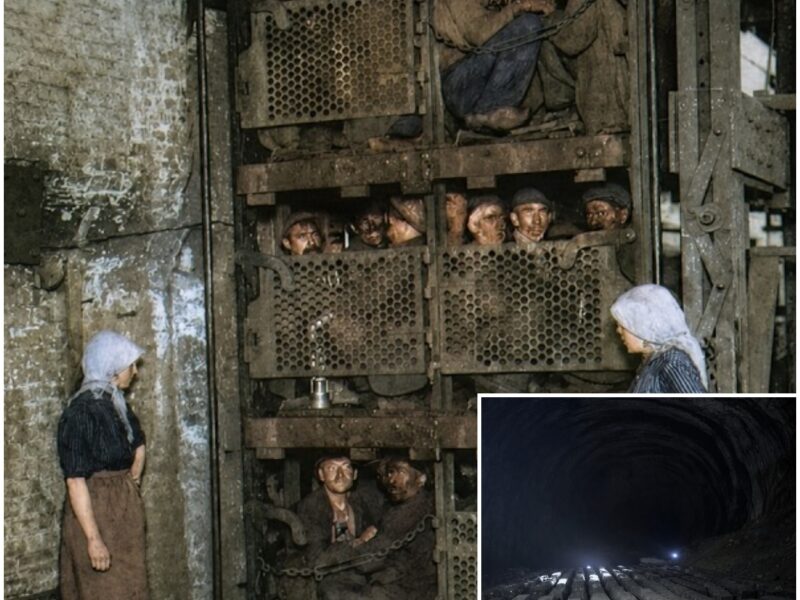
Coffins, rows of them, laid out with walking space between, running past the edge of the light in both directions.
No rescue ever reached these men.
No recovery was ever made.
Every record in Pennsylvania says the nine are still lying where they fell.
Dead men don’t bury themselves.
Someone came back to Carrick number two, knew the way in, took their time, sealed the door behind them.
What that inspector found in the dark would force open a case 50 years of paperwork was built to keep shut and prove that the men who sealed this mine buried more than the dead.
There is not much left of Dunarrick, Pennsylvania.
A double row of company houses along a creek that runs orange when it rains.
A Slovac church with a padlock door.
a war memorial and beside it a granite slab with nine names and one date.
October 28th, 1955.
The people who still live here are mostly old.
They park their cars over ground that is hollow underneath and they know it.
Everyone in Fet County lives on top of somebody’s old mine.
It is the price of the place.
Most of the time, the ground keeps the bargain.
In March of 2005 on Third Street, it stopped.
The complaint comes into the state’s Bureau of Abandoned Mine Reclamation on a Tuesday.
A widow named Ference, 79 years old, cracks running up her cellar wall like veins, her back door jammed shut in its frame.
The house has stood since 1921.
The bureau assigns the file the way it assigns every file in that district.
It goes to Nora Renick.
Renick is 34.
She is a project inspector, mine maps, subsidance claims, gas venting, the slow custodial work of a county that produced coal for a hundred years and has been paying for it ever since.
She carries 40 sealed mines in her district portfolio.
She grew up 20 minutes from Duner in Peropoulos and like everyone who grew up there, she knows what the granite slab beside the war memorial is for.
She knows it better than most.
The ninth name on it is her grandfather’s.
Andrew Renick was 31 years old when he rode the cage down into Carrick number two for the night shift and the portal came down behind him.
Norah’s father was six.
What Norah has of her grandfather is one photograph, a lean man squinting on a porch step and the particular silence her father builds around the subject.
A silence with walls and a roof on it.
The family learned to live next to it.
In Fet County, that is a common architecture.
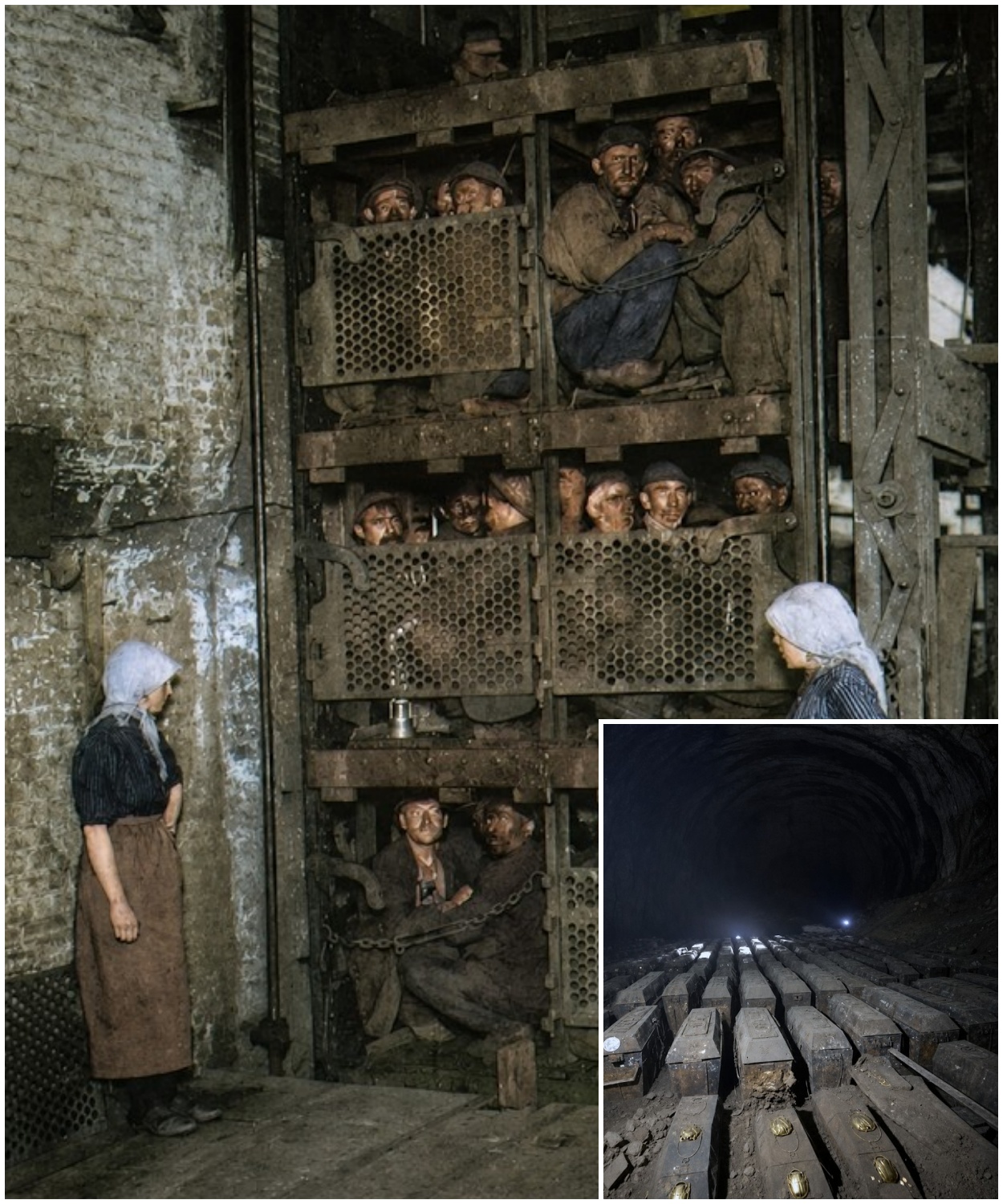
So when the ference file lands on her desk with the words Carrick number two workings printed in the location field, Norah does not feel anything dramatic.
It is one of her 40 holes.
She has driven past its sealed portal a 100 times.
She pulls the mine’s folder from the map room the way she would pull any other.
The folder is thin, a seam map from 1948 on cracked linen.
An accident bulletin from November 1955.
and the final abandonment map filed in 1961 certified, stamped, signed the official drawing of everything under Dun Carrick.
She notes the East Gallery runs beneath Third Street at a depth of about 200 ft marked worked out standard.
If the roof of that gallery is failing after 50 years, the widow’s cracked cellar is exactly what it looks like from above.
The fix starts with a hole.
Before the state spends money filling a void, someone has to look inside it.
That is the job.
Drill a 6-in bore hole down into the old workings, lower a camera, see what 50 years of dark has done.
Nothing about it goes smoothly because nothing in this work ever does.
The drill crew spuds in on a Thursday and spends most of a day grinding through sandstone the old map said was thinner than it is.
At 190 ft, they should punch through into the gallery.
They don’t.
They find rock where the certified map shows open entry.
The map is wrong.
Old maps often are.
Norah re-shoots the survey off a different datim, moves the rig 60 ft west, and they start again.
It costs 3 days and a chunk of her quarter’s budget.
She writes it up the way she writes everything up.
On the second attempt at 204 ft, the drill string drops.
Open void.
The crew cases the hole and Norah runs the gas meter over it.
Low oxygen as expected, nothing explosive.
Then they rig the downhole camera, a light, and a lens on 250 ft of cable, and Nora sits in the truck with a small gray monitor on her knees and sends it down.
This part she has done more times than she can count.
She knows what sealed mines look like inside.
Standing water, usually roof falls, rusted rail, timber props gone soft as sponge.
a darkness that has not been interrupted since before she was born.
The camera clears the casing.
The light finds the gallery floor.
The floor is dry.
That is the first wrong thing.
50 years and the east gallery is dry as a sellar shelf.
The second wrong thing is that the floor is not empty.
The light moves across it in a slow cone.
And inside the cone there are shapes long, low, regular.
Set out in rows with walking space between them.
Row after row running past the edge of the light in both directions.
For a few seconds, Nora reads them as equipment, supply crates, maybe left from the working days.
Then the camera steadies and the shapes resolve and she stops thinking about equipment.
They are coffins, steel burial cases, gray with rock dust, lids shut, laid out on the gallery floor 200 ft under a widow’s cracked foundation.
She counts the ones the light can reach.
Six.
She pans the camera.
Three more at the edge of the dark.
Nine.
Nora Renick has spent 11 years inside the paperwork of dead minds and she knows the record on this one cold.
The way you know a thing that belongs to your own family.
Carrick number two was sealed with the men inside.
No rescue reached them.
No recovery was ever attempted.
The state closed the file in 1955 on nine miners left where they fell.
That is the phrase in the accident bulletin.
That is the sentence, her family was handed instead of a body.
There is no version of that story with coffins in it.
Coffins mean hands.
Coffins mean somebody ordered steel burial cases and carried them into a sealed mine and did slow, deliberate, careful work in the dark and then walked out and said nothing and let the granite slab up top go on telling it wrong.
Her first thought is not grief.
Grief would make sense later.
Her first thought is an inspector’s thought, flat and procedural, and it will stay with her for the rest of her life.
The paperwork doesn’t allow this.
She zooms the camera on the nearest case.
The dust on the lid has settled thick, but the stencil under it still holds.
Block letters, white paint, the way a company marks its property, a surname, and a single initial.
She reads it twice because the first time her mind refuses to do the work.
The name on the coffin is Renick.
The initial stands for Andrew.
She is looking at her grandfather.
Within a week, Carrick number two belongs to everyone except Norah Renick.
That is not cruelty.
It is procedure.
And she would have written the same memo herself.
The moment the remains in the East Gallery are confirmed as the 1955 crew.
And the moment the state cross references the recovery roster against the personnel file of the inspector who found them, Norah is off the site.
Conflict of interest.
A project manager named Duca takes over, a decent man who keeps apologizing to her in doorways.
The coroner’s office takes custody of the gallery.
The state police open a file because coffins in a sealed mine are a crime scene until someone proves otherwise, even if every suspect has been dead for decades.
Norah is given administrative tasks in an office 40 minutes away.
She is also given without anyone quite saying so the role she will hold for the rest of this story.
Next of kin.
To understand what the coffins broke, you have to understand the story they broke.
The one FET County had lived with intact for 50 years.
It went like this.
On the night of October 28th, 1955, 17 men were underground at Carrick number two, a small drift mine working leased coal for Greavves Coal and Coke.
At 11:40, a section of roof came down along the main holage entry.
Not an explosion, no fire, just the mountain shifting its weight the way it sometimes does.
Eight men out by the fall reached the surface.
Nine men in by it did not.
The rescue effort lasted 3 days on paper.
The fall was long, better than 200 f feet of collapsed entry.
Still working, still dropping rock.
The company brought in crews from two neighboring operations.
On the second day, a state district mine inspector named Roy Callum arrived from Uniontown, walked the ground, and concurred with the operator’s engineer.
The fall was unstable.
The air beyond it was almost certainly dead and continued digging risked the rescuers without meaningful hope for the trapped.
On the third day with a gas reading at the fall face they said proved the atmosphere in by was unservivable.
The effort was called.
The mine was sealed in the first week of November 1955.
The state’s accident bulletin closed the file on nine men left where they fell.
The families were given the phrase, “A settlement of $1,100 each from an operator already sliding toward insolveny and a granite slab.
” Dun Cararrick did what Patchtowns do.
It absorbed the thing it could not change.
Greavves Coal and Coke wound down its last lease in the 60s and dissolved.
Walter Greavves died in 1974 and is buried in Connellsville under a modest stone.
The men who sealed the mine grew old around the people whose fathers were inside it, and the story held because there was nothing to push against it.
Now there is a gallery full of steel coffins, and the story is bleeding from a wound nobody can find yet.
The county lets Norah keep one thing, the paper.
Nobody can take the paper from her because the paper is public and because half of it already lives in the map room she has worked out of for 11 years.
So, while Duca’s crew engineers a proper opening into the East Gallery, Norah does the only thing left to her.
She starts reading the file of her own family’s disaster.
Really reading it for the first time in her life with an inspector’s eyes instead of a granddaughters.
She builds the roster first.
Nine index cards on her kitchen table.
Andrew Renick, 31, her grandfather.
Steve Mahalik, 40.
John Andress, 26, and his brother Michael, 24, who had worked side by side and stayed that way.
Frank Balandi, 44, the shot fire.
George Toth, 51, oldest man on the shift.
Chester Kovaley, 35.
Bill Harding, 28, and Paul Kesler, 19 years old, four months in the mine, whose mother reportedly stood at the portal every day of the rescue and had to be led home when they called it.
nine men, 16 children among them, her father one of them.
Her father is 56 now, a retired machinist with two knee replacements.
And when she drives to his house in Peropoulos to tell him about the coffins before the state can, he does something she has never seen him do in her life.
He asks her to stop.
Not to stop grieving, not to stop the state.
He understands no one can, but to stop her part.
Let the coroner do the identifications, sign the forms, take the remains when they’re released, and put his father in the churchyard where his mother wanted him in the first place, and let that be the end of it.
You found him, her father says.
That’s more than we ever thought we’d get.
Leave the rest in the ground.
She asks him what the rest is.
He looks at her for a long moment on his own porch with his coffee going cold.
And Norah watches her father, a blunt and practical man, do the thing his whole generation in that county learned to do.
She watches him close.
It was 50 years ago, he says.
Everyone who did anything is dead.
Whatever you dig up now lands on the living.
He goes inside.
The conversation is over.
And Norah is left standing on the porch with a fact she cannot file.
Her father who was 6 years old that October is not indifferent to what happened at Carrick number two.
He is afraid of it.
The break when it comes does not come from the paper.
It comes from a funeral director.
Bosow and son has buried Duncar’s dead since 1930.
And the current Bosow third of the name calls the bureau with a question about remains transport gets shunted around and ends up off the record with Nora.
because in a small county everything ends up with somebody’s phone number.
In the course of the call, he mentions almost idly that his grandfather’s ledgers run back to the 40s, that everything the firm ever handled is in the basement in canvas bound books, and that if the state needs casket records for the identifications, Norah stops him.
Casket records.
Well, Bosow says somebody made those cases.
Steel burial cases don’t come from nowhere.
If they were bought anywhere in this valley, there’s paper on them somewhere.
It is the first door.
It is also, though she does not know it yet, the smaller of the two things that phone call gives her because when she drives down to look at the ledgers in the basement of the funeral home, she meets a man sitting in the office upstairs, old straightbacked cap on his knee.
He has come to pre-arrange his own funeral, the way old men in coal towns do, practically without drama.
Bosow introduces him.
Emil Ruska, 81 years old.
Dun Carrick, born and raised.
Surface crew.
Carrick number two.
October 1955.
Ruska looks at her for a while when he hears the name Renick.
Then he says the thing he has apparently decided somewhere in 50 years of Sundays that he would say if any of the nine’s blood ever stood in front of him and asked.
Except she hasn’t asked anything yet.
That is what she will remember about it.
She hasn’t asked him a single question and Emil Huska sets his cap on the desk and looks at his hands and says, “That fan ran too long.
The casket ledgers are a dead end.
” Norah spends two evenings in the basement of Bosow and Sun with 50 years of canvas bound books and finds exactly what the careful part of her expected, nothing.
Bosow and Son never handled the nine.
No steel burial cases were bought through any funeral home in the lower end of the county in 1955 or any year near it.
Bosow’s grandfather kept records like a customs house and the records are silent.
Whoever bought nine steel cases did not buy them here and did not buy them as funeral goods.
She writes it down anyway.
11 years of state work has taught her that a clean absence is still evidence.
It just doesn’t tell you what of yet.
Emil Huska is not a dead end.
He is something more frustrating, a door that opens one inch at a time.
She visits him twice that week at his kitchen table in Dunarrick, three blocks from the portal he worked at as a young man.
He is sharp, precise about some things, foggy about others, and she comes to understand, not foggy at all about the things he claims to be foggy about.
50 years of silence has a grammar to it.
He answers what he decides to answer.
What he gives her the first visit is this.
The rescue was real.
He wants that understood before anything else.
Those first two days, nobody on that surface was pretending.
Men clawed at the fallen shifts until their hands bled through their gloves.
And Walter Greavves stood at the portal mouth the whole first night in his good coat.
And it was not theater.
People will want it simple now.
Ruska says it wasn’t simple.
Then the state inspector came from Uniontown and there was a meeting in the lamp house with the door shut.
Greavves the inspector and the dayshift foreman.
And after the meeting, the digging slowed and on the third day it stopped.
There was a gas reading at the fall face.
Numbers were read out to the families as proof the air in was dead.
Ruska was standing close enough to hear the numbers.
And Norah asks, “And I was a fan man’s helper before I was anything else,” Huska says.
He turns his coffee cup a quarter turn, and that is all the editorializing he permits himself for the entire visit.
You go look at what the fan was doing.
Fan doesn’t know how to lie.
The fan.
Every drift mine of that era breathed through one.
A main exhaust fan pushing air through the workings on a circuit running day and night.
Its records kept the way the law required.
Because ventilation was the one thing Pennsylvania had learned at the cost of a few thousand dead men, never to leave to memory.
A fanhouse log, date, water gauge reading, hours run, initials of the man who checked it.
The most boring document a mind produces.
Boring documents are Nora Renick’s native language.
Here is where being barred from her own case stops mattering because none of what she needs next is behind the state police tape.
When Greavves, Cole, and Ko dissolved in 1968, its remaining records went where dead company’s records go.
A courthouse box here, a state transfer there.
The abandonment file for Carrick number two lives with the department that inherited the old Bureau of Mine’s paper.
She has requested that file a h 100 times in her career for a 100 ordinary reasons.
Nobody thinks anything of Inspector Renick pulling dissolution era records.
She is careful just the same.
She requests four defunct operators files at once.
Greavves coal third in the stack.
The box when it comes smells like every records box.
Dust and cold paper.
Seam maps.
Royalty statements to the land company.
Correspondence about a pump.
the 1955 accident bulletin she has already memorized.
And near the bottom in a folder marked maintenance ventilation, a canvas covered ledger with a broken string tie.
The fan house log for Carrick number two.
It survived for the stupidest and most human of reasons.
It looks like nothing.
No one weeding a dead company’s file in 1968 read a column of water gauge readings as a confession.
It was maintenance.
It was kept because throwing out statemandated records was more trouble than boxing them.
Norah opens it on a records room table and reads it like an inspector front to back.
October 1st onward, letting it be boring for as long as it can.
October 28th, readings at 6:00 in the morning, 2:00 in the afternoon.
Normal.
That night, the mountain came down.
October 29th, 30th, 31st.
The fan runs.
Of course it does.
The rescue is underway.
Men are at the fall.
Air matters.
Readings twice a day in a tight, careful hand initialed in the right hand column.
October 31st is the day the rescue was called.
The day the families were read the gas numbers.
The day the state’s own bulletin says the air beyond the fall was declared unservivable and nine men were formally left where they fell.
November 1st, the fan runs.
November 2nd, the fan runs.
This is the day.
She pulls the accident bulletin and sets it beside the ledger to be sure.
This is the day the seal was certified complete.
The mine is closed officially.
There is nothing on the other side of that concrete but a tomb.
November 3rd, the fan runs.
November 4th, November 5th, readings twice a day.
Water gauge steady.
Initials in the column.
The same initials.
Day after day, Norah sits back from the table and makes herself say the engineering out loud quietly in an empty records room because it is the kind of fact you have to hear in a voice to believe.
You do not ventilate a tomb.
A fan is not a light left on by accident.
It is a machine the size of a truck bed that costs real money every hour it turns, run by a company that was counting nickels.
And its entire purpose, its only purpose, is to deliver breathable air to the far end of a mine.
Air for the dead is not a mercy anyone pays the power company for.
If the fan is running, it is running for someone.
And whoever kept this log, walked to the fan house twice a day, passed the new seal, past the granite slab grief of an entire town, and wrote down the proof in the state’s own required format.
The gas reading read aloud to the families was the lie.
The fan log is the truth kept in duplicate columns by the lies owned bookkeeper.
Her grandfather did not die on October 28th, 1955.
On October 28th, her grandfather was barricaded in the East Gallery with eight other men in workable air waiting because a barricade is what miners are trained to build, and waiting is what the training is for.
while his six-year-old son was being told he was dead, while the seal was poured, while the county began to grieve.
The men of Carrick number two were alive behind the fall, and the fan turned day and night to keep them that way.
And the man who ordered it sealed knew knew so thoroughly, so operationally, that he kept the air going and the records current.
She checks one more thing that night because she is her job before she is anything else.
And the job says corroborate.
50-year-old utility accounts are a nightmare, but a dissolution file keeps its unpaid bills.
And there it is in the creditor schedules.
Electric service fan house account Carrick number two.
Build load running clean through the first week of November 1955.
The power company with no idea what it was writing down kept the second copy of the truth.
Two documents.
Neither knows about the other.
both count the same days.
Then she turns to the last page of the fan log because she has been avoiding it and she knows she has been avoiding it and an inspector finishes the file.
November 8th, 1955 morning reading normal initial afternoon line and the hand the same hand as every other line tight and careful writes three words fan off complete.
11 days after the collapse, 6 days after the town was told the mine was a grave, somebody stood in that fan house and shut off the air to nine living men and initial it.
Two letters, right- hand column, same as every day before, DK.
DK is not a mystery, and Norah does not treat it as one.
The initials are in the accident bulletin she has known by heart for weeks.
Dayshift foreman Carrick number two Dale Ketering in the lamphouse meeting with the door shut.
Roska had said Greavves the inspector and the dayshift foreman.
Ketaring was the third man in that room.
Ketaring’s hand kept the fan log twice a day 11 days in the same tight careful script.
Ketaring’s hand wrote fan off complete.
He died in 1991.
He is buried in Dawson, four miles from the portal.
And for 36 years after that November morning, he lived in the valley, coached a little league team, and stood at the back of St.
Sirills at every funeral Dunarrick held, including the parish record shows every single one ever held for a family of the nine.
Norah finds that last fact in the church’s own guest books, and it stops her for a full evening.
She does not know yet what it means.
She writes it down and leaves it open because the file is teaching her that in this story, attendance is testimony.
Meanwhile, 40 minutes away, the East Gallery has been giving up its own account.
And Norah receives it the only way she now can in a conference room as next of kin in the state’s careful language with Duca sliding briefing summaries across the table and apologizing with his eyebrows.
The gallery says this.
The nine were found in nine steel burial cases of a commercial pattern arranged in three rows.
The remains had been placed in the cases with evident care.
Each man laid straight, arms composed.
With them sealed in were personal effects.
boots, belt buckles, two pocket watches, a rosary, and the artifacts of the barricade itself gathered and placed alongside the men as if someone had understood they belonged together.
But it is the hardware, not the men, that breaks the case open.
Because hardware is dated the way grief never is.
The cases are steel, and steel is paperwork.
The coroner’s forensic contractor traces the pattern and the maker’s stamps.
A burial case design not manufactured before 1959.
The mortar, repointing the inner seal, visible the moment Duca’s crew cut through, sets chemically like a Portland blend that reads as 1960s work laid neatly over the original 1955 pour.
There is a rock dust film on the coffin lids and beneath the coffins, none.
The cases were set down on a swept floor.
Someone cleaned the gallery before they furnished it.
And along the holage entry where the 1955 fall had been, the state’s engineers find the fall cribed, timbered through, a passage opened in the collapse and shored with cut lumber, the sawmill stamps on it, postwar commercial stock, and then the whole passage deliberately dropped again behind them on the way out.
The picture assembles itself with a kind of horrible administrative calm.
And Norah watches the investigators arrive, briefing by briefing, at the place she has already been living for weeks.
Nobody broke into a tomb.
Somebody came back through a door they knew years after 1955 with lumber and mortar and nine steel burial cases and spent, the engineers estimate, no less than several weeks underground.
They timbered through 200 ft of fall.
They found the barricade in the east gallery and what the 11 days had left behind it.
They laid nine men out with care that bordered on ceremony on a floor they swept first.
Then they backed out, collapsed the passage behind them, reordered the seal so cleanly that 50 years of inspections never looked twice at it, and returned the mine to its official silence.
The question is no longer who died or when or how.
The question is, what could possibly force men who had gotten away with it to go back? Norah finds the answer where she should have found it the first week in the one document she has handled more than any other, the one that had already lied to her once.
The 1961 abandonment map.
It is the map that sent her first bore hole into solid rock.
She had written that off the way every inspector writes it off.
Old maps are wrong.
Datam’s drift surveys were sloppy.
But she is done extending charity to this file.
She takes the 1961 map and the 1948 seam map on cracked linen and the state’s brand new laser survey of the gallery as it actually exists.
And she overlays all three at her kitchen table with the index cards of the nine watching her from the corner.
The 1948 map and the 2005 survey agree with each other.
The 1961 map, the certified map, the legally binding final record of Carrick number two, disagrees with both.
The east gallery is drawn 80 ft south of where it runs.
Two crosscuts that exist on the ground are absent from the drawing.
The error is not drift and it is not sloppiness because everything else on the sheet is meticulous.
The map is precise everywhere except the one place precision would matter.
The exact panel of ground where nine coffins were waiting to be found.
Her drill missed the gallery in March because the official record of Pennsylvania was engineered in 1961 to make sure any future hole would miss it.
The map was not a mistake.
The map was the last shovel of dirt on the grave.
And the map explains the date, 1961.
She pulls the abandonment file itself, the cover documents she has never had reason to read closely.
And there is the mechanism, mundane and pitiles.
Greavves Cole and Ko winding down files formal notice of abandonment for Carrick number two in the spring of 1961.
The law is older than any of them.
Upon abandonment, the operator files a final certified map of the workings and the district office signs off on the condition of the ceiling.
The state closes the ground forever.
officially with paperwork.
That filing is the trap Walter Greavves built for himself in 1955 and then had to walk into six years later.
As long as the mine sat temporarily idled, the file stayed open and nobody looked.
The moment he abandoned it, the state would touch the mine one last time.
Survey, certificate, signatures.
A final map drawn from the old workings data would invite a check.
A discrepancy would invite a visit.
a visit would end everything.
The abandonment Greavves needed in order to die, a retired businessman, required the mine to be able to survive one last official glance.
So, in 1961, before the paperwork, came the visit.
Weeks underground.
The men found behind their barricade.
And here, the timeline says something.
Norah has to stand up and walk away from the table before she can finish thinking it.
Whoever timbered through that fall in 1961 was the first human being to see what the 11 days had been.
They saw the barricade.
They saw whatever the men had left.
Marks, arrangements, the evidence of waiting.
They saw it and they cleaned the floor and they bought coffins.
Coffins nobody required.
Coffins that made the work slower, heavier, riskier.
Nine steel cases hauled through a cribed passage 200 feet down when the men could have been left as they lay behind a reoured seal, and no living soul would ever have known the difference.
Every hour of that labor multiplied the chance of discovery, and someone spent the hours anyway.
Inside the coverup, invisible to the state, invisible to the town, somebody had conducted nine funerals.
She thinks of a man standing at the back of St.
Sirills at every one of the family’s services for 36 years attending funerals for men he had already buried himself.
The file’s last page is the certificate.
She has seen a hundred like it.
Abandonment approved.
Condition of ceiling satisfactory.
The final map accepted and entered into the permanent record of the Commonwealth.
Signed for the operator W.
Greavves.
certified by the surveyor of record and countersigned in the space reserved for the state.
The inspection that makes it all legal.
The signature that closed Carrick number two against every future question.
The same district office.
The same man who 6 years earlier had stood at the fall face and read the family’s a gas number R.
Callum district mine inspector department of mines and mineral industries.
The state did not miss what happened at Carrick number two.
The state signed it.
To understand why nine men were sealed alive into Carrick number two, you do not need psychology.
You need a balance sheet.
By October 1955, Greavves Coal and Coke was a company being kept alive by handshakes.
The Coke market it was born to feed had been dying since the war.
The coal under Dunerrick was leased, not owned.
The equipment was mortgaged.
And Walter Greavves, 61 years old, respected, solvent on paper in the way a man crossing thin ice is dry, was six months behind to the land company and further behind than that to the bank in Uniontown.
The state’s 2005 review, when it finally reconstructs the company’s books from the dissolution file, finds the other thing, the reason the roof came down.
For at least a year, Carrick number two had been robbing pillars along the main holage entry, cutting coal out of the support that held the mine’s own spine up.
Because support coal is free coal already cut to the seam, no development cost.
It is the oldest bad bargain in mining.
Every ton off those pillars went straight to the thin black line, keeping the company alive, and every ton made the entry above it weaker.
On the night of October 28th, the mountain called the loan.
Now run the arithmetic the way Walter Greavves ran it in the lamphouse on the second day with the digging still going.
The fall was 200 ft of broken ground still working.
Punching through it safely meant timbering as you went.
Engineers later estimate 3 to 6 weeks.
Greavves coal could not fund 3 weeks of anything.
A rescue meant borrowed crews, statemen on the property around the clock and lights on every corner of the operation.
And the first thing weeks of official attention would find in the exposed guts of the fall itself was the robbed pillars.
The proof that the collapse was not the mountain’s whim, but the company’s own hand.
Criminal negligence.
Ruin either way.
Against that, a gas pocket at the fall face.
Real black damp genuinely there.
The kind of dead air of fall always traps.
Read out to the families.
Not as what it was.
A reading at the fall, but as what it was not proof of the atmosphere beyond it.
A settlement of $1,100 a man.
A grieving town, a sealed portal, and a company that survives to keep 40 surface men in wages.
Nine lives against everything.
The fan was the part of the arithmetic that could not be admitted even inside the lamphouse.
Because Greavves knew the air beyond the fall was workable.
The mine’s own circuit told him so.
And he knew what miners do when the roof comes down and the air holds.
They barricade.
They wait.
They trust the surface.
So the fan stayed on.
Not mercy.
An open option.
If the bank came through, if the land company forgave, if some door opened that let the men come out without the pillars coming to light, the air kept the choice alive.
The door never opened.
What arrived instead on the 2nd of November was Roy Callum’s certificate, seal complete, file transmitted to Harrisburg.
And once the Commonwealth of Pennsylvania had formally closed Carrick number two, a turning fan stopped being an option and became the last piece of evidence that anyone had doubted the tomb.
The file closed on the second.
The fan ran six more days.
Norah will never learn what those six days were, whether Greavves was arranging money or courage or simply could not give the order.
The record only says what the record always says.
On the morning of November 8th, the readings were taken as normal.
That afternoon, fan off, complete initial DK in a hand that does not waver on the page, whatever it did in the man.
Callum’s arithmetic was smaller and the review concludes older.
His last routine inspection of Carrick number two, five weeks before the collapse, had certified the holage entry safe, an entry whose pillars were half gone.
Either he missed it, which ends a district inspector’s career, or he was paid not to see it, which ends more than that.
The dissolution files creditor schedules contain among grieved small debts two personal notes to R.
Callum marked satisfied and the review lets that fact lie on the table without adjective.
By the second day at the portal, Roy Callum was not choosing between truth and a bribe.
He was choosing between Greavves ruin and his own.
Every signature after that, the gas concurrence in 1955, the abandonment certificate in 1961, was the same signature, renewing itself.
Which leaves the third man.
And for the third man, the county has a living witness.
Norah’s second formal interview with Emil Huska takes place in April with a state trooper present at Huska’s own request.
He wants it on the record, he says, while he is still the one saying it.
And on the record, gently he corrects himself.
In March, he had told Norah he was sent home when the rescue was called.
That was true, he says, but it was not all of it.
He was a fan man’s helper.
For a week and a half after the seal was poured, he came up the hollow to grease bearings and check belts on machinery the company had not yet pulled.
And every one of those mornings, the main fan at Carrick number two was turning.
He heard it.
The whole patch could hear it.
A mine fan is a sound a coal town sleeps inside of and it went on for days after the funeral masses had already been said.
He asked Dale Ketering about it once, the 9th of November, or near it.
He remembers because the sound had stopped that week and the quiet was worse.
He asked why the fan had run so long past the seal.
Dale looked at me, Ruska says, the way you’d look at a man standing on your bad leg and he said, airing her out for the closure papers.
state wants dry readings and I was 22 and it was Dalek Kettering.
So that was that.
Then Huska is quiet for a while and the trooper does not hurry him and Norah does not either.
I didn’t know, he says finally.
I want the record to have it right.
I did not know those men were behind that fall breathing.
But I knew fans and I knew that answer was wrong and I decided it wasn’t mine to pull on.
I had a wedding coming.
I had 40 years in that valley ahead of me.
He puts his hands flat on the table, an old man’s hands, and delivers the sentence he has clearly built over 50 years of Sundays at St.
Sirills.
You can live a long time next to a thing you decided not to know.
It doesn’t get smaller.
And Ketaring Ketering, who shut off the air with his own hand and then stood at the back of the church at every funeral for 36 years, Ketaring is the one the gallery itself testifies for.
Because in May, the coroner’s office completes its inventory of the effects sealed in with the men and calls Nora to a viewing room with a manila folder and a form to sign.
Most of it she expects by now.
The rosary was George Toths.
The two pocket watches have stopped at different hours, which the examiner notes without comment.
The barricade materials show the men organized, disciplined, rationing, carbide, water, the dinner pales pulled.
Then the examiner slides a photograph across the table.
Item 41.
A dinner pale, aluminum dented, the lid sealed back on tight when it was found, set apart from the pulled supplies, placed on her grandfather’s chest under his folded hands by whoever laid him in the case.
Inside the pale, folded small, kept dry for 50 years by a lid pressed down with intention, a single sheet of paper.
Pencileled.
dated November 5th, 1955.
Eight days after the county buried an empty date on a granite slab, three days before the fan stopped.
Her grandfather, alive in the dark, had written something down.
And Dale Ketering, finding it in 1961, had understood what it was, and had not taken it, and had not destroyed it, and had not dared deliver it.
He had sealed it back into the pale and laid it under Andrew Renick’s hands to wait for a future he could not imagine.
And the first line of the address on the fold is why Norah has to set the photograph down for Tommy, her father’s name.
The state announces its formal review the last week of May.
Death certificates for all nine to be examined for amendment.
The abandonment record of Carrick number two reopened.
Findings to be published.
It is everything Norah has carried the file toward since March.
She drives to Periopoulos to tell her father about the review and about item 41, a letter addressed to a six-year-old in evidence storage, waiting for the only person entitled to open it.
Her father listens all the way through.
He thanks her in a voice she barely knows.
Then he tells her he will not read it and he will not attend.
Not the review, not the rearial, none of it.
And this time he does not go inside and close the door.
This time he stays on the porch, looks at his daughter, and tells her why.
Tommy Renick was 6 years old in October of 1955.
And this is what he remembers.
He remembers being carried to the portal on his uncle’s shoulders the first night and the lights and his mother’s coat.
He remembers the funeral mass with no coffin in it.
And he remembers this is the part he has never once said out loud.
Not to his wife, not to his daughter, not in 50 years.
He remembers the sound, the fan.
The whole patch slept inside that sound.
every house in Dun Carrick, every night of his six years of life, the low, steady breath of the pit up the hollow.
And after they buried his father, after the mass, after the slab was ordered, after the grown-ups all agreed on the word gone, the sound was still there.
He remembers lying in bed, listening to it, and being comforted by it, the way a child is comforted by anything that hasn’t changed.
Then one week in November, the sound stopped and the quiet woke him.
And in the morning, the grown-up’s faces were wrong.
He asked his mother why the pit had gone quiet.
She took his hand hard enough to hurt and never answered, and nobody ever answered.
And Tommy Renick learned what every child of that county learned.
Some questions are loadbearing.
You don’t pull on them.
The house stands because you don’t.
I was six and I already knew that fan meant something.
He tells Nora on the porch in May.
I’ve had 50 years to not figure out what, and now you’re telling me my father was under that sound the whole time, breathing because of it, maybe listening to it the way I was.
He looks at the yard for a while.
I made my peace with a dead man, he says.
I never made any peace with a waiting one.
That letter, that’s a man who thinks he’s coming home.
I could live with him dead, Nora.
I can’t live with him waiting.
He is not asking her to stop anymore.
He is telling her what it costs.
There is a difference and they both stand in it and she lets it be.
The state’s findings are published in September and they are in the end paperwork which is the only justice this story was ever going to have and the script of the review is honest about why.
Walter Greavves died in 1974.
Roy Callum died in 1982.
Dalek Kettering died in 1991.
Greavves coal and coke was dissolved in 1968.
There is no estate, no successor, no one to charge, and nothing to seize.
The Commonwealth cannot prosecute the dead.
What it can do, all it can do is correct itself.
So it does completely in the permanent record.
The 1955 accident bulletin is amended.
The collapse attributed to systematic pillar removal along the main holage entry.
The gas determination at the fall face reclassified as not representative of the atmosphere in the phrase left where they fell formally struck.
Nine death certificates are reissued.
Cause asphyxiation following termination of mechanical ventilation.
Date of death on or after November 8th, 1955.
The 1961 abandonment map is voided as fraudulent and replaced in the state’s files with the true survey.
The correction sheet bound by requirement directly on top of Callum’s certificate so that no one can ever again pull the lie without the truth coming with it.
No one goes to jail.
Everyone responsible died respected.
The review names all three men and every mechanism and then it ends because there is nothing left for it to reach.
Partial justice fully accounted.
The county understands exactly why this is all there is.
And understanding it is the difference between an open wound and a scar.
The nine come home on a Saturday in October, 50 years almost to the day.
St.
Sirill’s churchyard, Duneric.
Nine graves and two rows dug by a contractor Bosow and son hired.
Though old Bosow waves what the families later find out he waved.
The Andress brothers are buried side by side, the way they worked.
Paul Kesler’s grave is the shortest walk from the gate.
His mother did not live to see it, but her sister’s grandchildren are there.
Emil Huska attends in a pressed suit, stands through the whole service on his bad legs, and afterward walks the row touching each headstone once like a man checking his work.
He has already arranged through Bosow to be buried in this churchyard himself.
He does not explain that to anyone and does not have to.
The stones carry two dates, every one of them.
October 28th, 1955 to November 8th, 1955.
11 days apart, carved in granite on orders the families gave together.
The first date the county grieved and the second date it was never allowed to know about.
And between them, the whole of the crime stated the only way Stone can state anything.
The old slab by the war memorial stays where it is, one date and all.
The families voted on that, too.
It is not wrong exactly.
It is evidence.
Norah speaks briefly at the service because the families asked her to, and she says the only sentence she has been carrying since the records room in March.
The record is not what happened, she tells them.
The record is what someone could afford to write down.
For 50 years, nobody in this valley could afford the truth.
And then the truth turned out to be filed under maintenance.
Her father is not there for that part.
She has stopped watching the gate by then.
He comes at the end.
After the crowd thins, a 56-year-old machinist walks up the row with an envelope from the state’s evidence unit in his jacket and stands at a grave with his own last name on it, older now than his father ever got to be.
Norah stays back.
Whatever he decided, he decided alone in the truck on the drive over.
She can see the envelope has already been opened.
He reads it out loud anyway at the stone because it was addressed and the address has finally come due and his voice only fails him in the places where anyone’s wood.
Pencled November 5th, 1955.
8 days in for Tommy son.
The roof come down, but we are all right.
Nine of us.
Good air, water for a while.
Yet we hear the fan going so they know we’re here.
They’ll be through that fall quick as they can.
These things take time is all.
Mind your mother.
Do your numbers.
Don’t let sister tell you you’re slow.
You’re not slow.
When I’m out, we’ll go see the Studebaker.
Like I said, I haven’t forgot.
It’s not so dark down here as you’d think.
Tom, you’re pop.
We hear the fan going, so they know we’re here.
Nine men in the dark doing the arithmetic of hope with the only number they had.
And the number was a lie in both directions.
The fan that told them the surface knew they were alive was the same fan that proves forever that the surface knew they were alive.
The machine kept both books at once.
To the men behind the fall, it said, “Hold on, they’re coming.
” To the record, it said twice a day in Dalek Kettering’s careful hand, “We know.
We know.
We know Andrew Renick died believing the sound.
That is the cost and it does not resolve and the script does not pretend it resolves.
11 days of trust can be proven now down to the hour and never answered.
There is no version of the arithmetic where the letter arrives on time.
There is only a 56-year-old man at a headstone with two dates on it keeping a promise about a Studebaker to a father half his age and a daughter watching from the path who did not give her family back what the mind took because nothing does that.
She gave back the true shape of what was taken in this county in this story.
That is the whole of what winning looks like.
Tommy folds the letter along its old folds and puts it back in his jacket next to his body where it rode down the hollow.
He wasn’t slow either, he says to no one, meaning himself, meaning the 50 years.
Then father and daughter walk out through the gate together, past the war memorial, past the slab with the one date that stood for half a century, down the double row of company houses over ground that is still hollow underneath in a town that has finally stopped being quiet about why.
The fan at Carrick number two ran for 11 days after the collapse until November 8th, 1955.
Now it is the record that says so.
(Disclaimer: This story is entirely fictional and created for entertainment purposes only. It does not represent any organization or individual, nor does it encourage inappropriate behavior. The content was generated with AI assistance.)