Police Sergeant’s Wife Vanished In Pennsylvania — 18 Years Later, Police Found The Clue They Had Mis
In the spring of 2003, life in Altoona, Pennsylvania still felt predictable to Daniel Mercer.
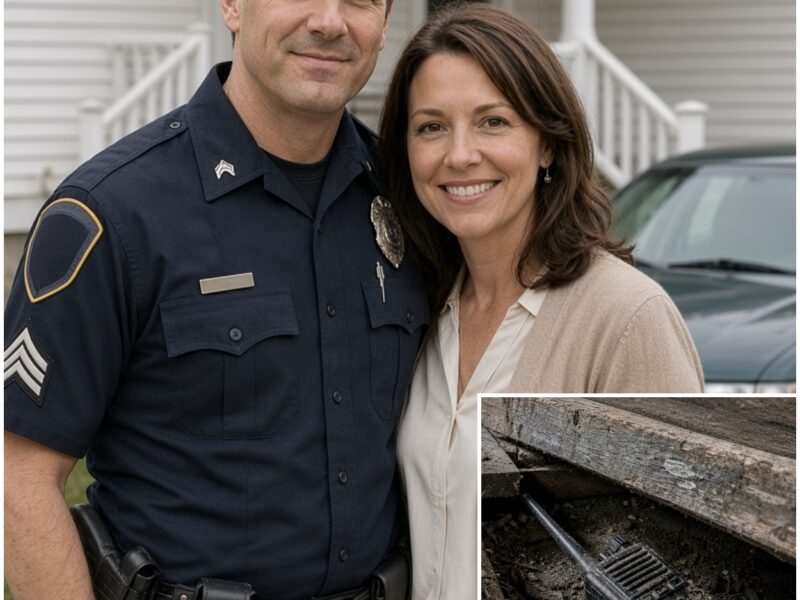
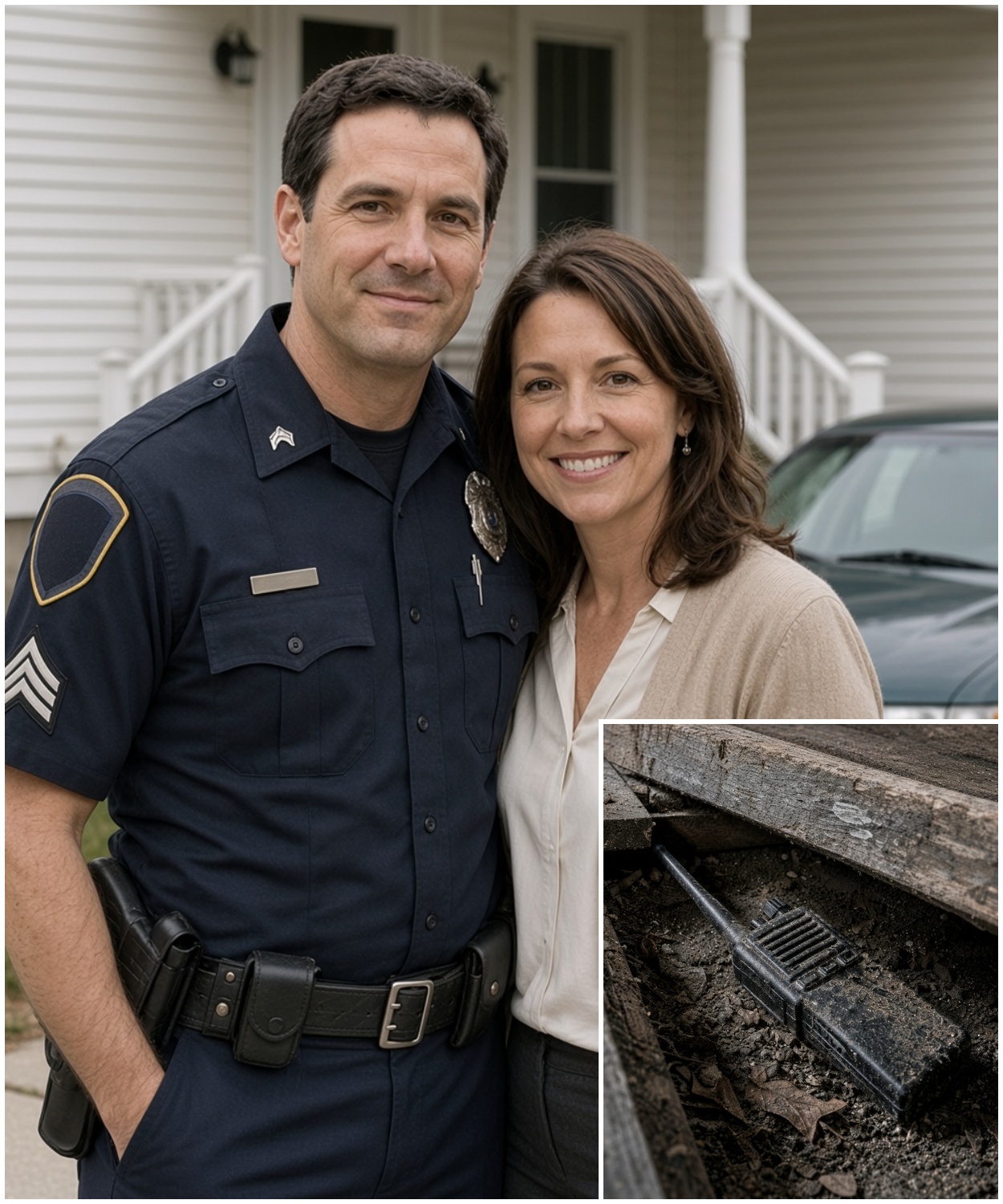
At 36, Daniel had spent more than a decade with the Altoona Police Department and had earned a reputation as a disciplined patrol sergeant who took violent crime seriously.
He was not known for shortcuts, favors, or looking the other way when a suspect had connections.
That reputation mattered deeply to him, but outside the department, the most important part of his life was his wife, Rachel Mercer.
Rachel was 33 and worked in records and evidence documentation connected to the Blair County Courthouse in Hollidaysburg.
Her job rarely attracted attention, yet it carried significant responsibility.
Evidence submitted by police departments had to match court records.
Seized cash had to be accounted for.
Vehicles, property, and other items connected to criminal cases required a clear chain of custody.
Rachel was careful, organized, and unusually good at noticing inconsistencies that other people might dismiss as clerical mistakes.
Daniel and Rachel had built a stable life around demanding jobs and familiar routines.
Neither of them expected that one arrest in April 2003 would change everything.
That month, Daniel and other officers responded to a serious disturbance at a bar in Altoona.
The man at the center of the incident was Calvin Rourke, 39.
A repeat offender with a history that included assault, intimidation, and other violent offenses.
Calvin had been known to local law enforcement for years.
This time, the evidence against him was strong enough to bring another major prosecution.
Daniel was directly involved in the arrest.
During the process that followed, Calvin made a threat that was impossible for Daniel to forget.
The message was simple.
One day Daniel would understand what it meant to lose the most important thing in his life.
The threat was documented and reported through proper channels.
Calvin was later convicted and transferred into the Pennsylvania state prison system, eventually being held at SCI Huntington.
Officially, he was now separated from Daniel and Rachel by prison walls, security procedures, controlled communications, and staff supervision.
For a short time, the threat seemed like nothing more than the anger of a convicted criminal.
Then Rachel began noticing things that did not fit.
A gray older model Chevrolet pickup started appearing near the Mercers’ neighborhood.
It was not connected to anyone Rachel knew.
Its appearances were inconsistent enough to avoid becoming an obvious pattern, but they often occurred when Daniel was working extended shifts.
When Daniel reported the vehicle and requested additional patrol attention around the area, officers found nothing actionable.
By the time police checked, the truck was usually gone.
No clear license plate information had been obtained, and there was no legal basis for treating the vehicle itself as evidence.
Soon afterward, the home telephone began receiving silent calls.
The calls did not contain threats.
There was no recognizable voice, no demand for money, and no direct mention of Daniel or Rachel.
The person calling simply remained silent before disconnecting.
Attempts to determine the source produced little useful information.
Some appeared connected to public telephones or locations that could not be tied to a specific individual.
The lack of a direct message made the calls more difficult to investigate, not less disturbing.
Rachel began documenting them herself.
She recorded dates, approximate times, and anything unusual that happened during the same period.
She also kept notes about the gray pickup.
Daniel took the situation seriously, but without a known caller, a confirmed stalker, or an identifiable suspect outside prison, the police had little evidence that could support a larger investigation.
Then the problem moved beyond their home.
Rachel became convinced that someone was following her after work.
Her daily routine regularly took her between Holidaysburg and Altoona, and she began noticing vehicles that seemed to remain near her longer than coincidence could easily explain.
On another occasion, she believed someone had followed her from a public parking area.
For days before her disappearance, Rachel shared her concerns with her older sister, Susan Parker.
Rachel no longer believed the calls and the unfamiliar vehicle were random.
She believed someone was deliberately watching her.
She planned to discuss everything with Daniel that weekend and insist that the situation be treated as a formal stalking investigation rather than a collection of unrelated incidents.
That conversation never happened.
Thursday, October 16th, 2003, began as an ordinary work day.
Rachel completed her responsibilities at the Blair County Courthouse and finished work at approximately 5:00 pm.
Her schedule gave Daniel every reason to expect her home in Altoona before 6:00.
6:00 passed.
Rachel did not arrive.
At first, the delay could have had an ordinary explanation.
Traffic, an unexpected stop, or a minor problem with the car were all possible.
But Rachel was dependable about communicating changes in her schedule.
By 7:00 pm, Daniel knew something was wrong.
The concern quickly became a law enforcement response.
Rachel’s route from Holidaysburg toward Altoona was checked, and information about her dark blue Ford Taurus was distributed to officers in the area.
Around 7:30 pm, the first major development came in.
Rachel’s car had been located a remote roadway in the general area of Canoe Creek State Park.
The location immediately created questions.
It was not where Daniel expected Rachel to be at that hour, and it did not explain why she had failed to contact anyone.
The vehicle itself offered even fewer answers.
There was no obvious damage suggesting a major crash.
Rachel’s purse remained inside.
Her wallet, bank cards, and cash had not been taken.
The keys were still with the vehicle.
Nothing suggested that robbery had been the primary motive.
Investigators also found no clear evidence of a violent confrontation around the car.
Yet, Rachel was nowhere nearby.
Within hours, local officers and state authorities began treating the disappearance as a serious incident.
The earlier silent calls, the unfamiliar pickup, and Rachel’s belief that she was being followed could no longer be dismissed as separate concerns.
For Daniel, every unexplained event from the previous months now pointed toward the same possibility.
Someone had been preparing for October 16th, and there was one name that neither Daniel nor the investigators could ignore.
Calvin Rourke.
Months earlier, Calvin had promised that Daniel would lose what mattered most.
Now, Rachel Mercer had disappeared without taking her money, her belongings, or anything that suggested she intended to leave her life behind.
By the end of that night, Calvin Rourke had become the first major suspect in the disappearance.
There was only one problem.
He was supposed to be locked inside SCI Huntingdon.
By the morning of October 17th, 2003, the disappearance of Rachel Mercer had already become one of the highest priority cases in Blair County.
The abandoned Ford Taurus near Canoe Creek State Park offered no obvious explanation, and the pattern of silent calls, suspected surveillance, and the threat made months earlier by Calvin Rourke gave investigators an immediate direction.
The problem was that Calvin appeared to have an airtight alibi.
Pennsylvania State Police investigators began reviewing his status at SCI Huntingdon, where Calvin had been incarcerated since his conviction earlier that year.
They requested movement records, cell check documentation, visitor logs, transportation orders, medical appointments, and telephone records covering the period before and after October 16th.
Everything pointed to the same conclusion.
According to the official records, Calvin Rourke had remained inside the institution on the night Rachel disappeared.
There was no court transport listed for him.
No outside medical appointment had been scheduled.
No approved transfer had taken place.
His visitor history showed nothing that could explain direct coordination with someone in Blair County.
The official telephone logs also contained no suspicious outgoing calls that could be connected to Rachel, Daniel, or anyone close to them.
For investigators, the contradiction was immediate.
Calvin had threatened Daniel months earlier.
Rachel had later reported being watched.
She had received unexplained calls.
Then she vanished without taking her purse, money, or personal belongings.
Yet the man most likely to benefit from frightening Daniel appeared to have been secured inside a state prison the entire time.
Calvin was questioned about Rachel’s disappearance.
He did not provide investigators with information they could use.
He did not explain the truck, the telephone calls, or Rachel’s disappearance.
He offered nothing that directly connected another person to the case.
But he continued to make it clear that he remembered what he had promised Daniel after his arrest.
That attitude deepened suspicion without creating evidence.
Investigators could not charge a man simply because he had once made a threat.
They needed proof that Calvin had either participated in the disappearance or directed someone else to do it.
For the moment, they had neither.
While detectives focused on Calvin, the physical search around Rachel’s abandoned vehicle expanded rapidly.
Local police, Pennsylvania State Police, emergency personnel, trained search teams, and civilian volunteers covered areas surrounding Canoe Creek State Park and nearby roads.
Search dogs were used where possible.
Rural properties, drainage areas, and locations accessible from the road were checked.
The assumption was simple.
If Rachel had left the vehicle nearby, something connected to her should eventually appear.
Nothing did.
No clothing was found.
No personal documents surfaced.
Her telephone did not lead investigators to her location.
No witness provided a reliable account of seeing Rachel after she left work.
Days passed without a meaningful break.
The absence of evidence created competing possibilities, but very few of them matched the facts.
There was no financial activity suggesting Rachel had planned to disappear.
Her bank accounts remained untouched.
There was no indication that she had prepared for travel or secretly established another life.
Nothing in her work history or family relationships suggested that she intended to abandon Altoona.
Daniel knew that better than anyone.
Rachel had left work expecting to come home.
Everything found inside her car supported that conclusion.
The investigation continued through its second week.
On the 14th day of the search, a volunteer checking a drainage area several miles from where Rachel’s Ford had been found discovered a small black object partly embedded in mud.
It did not belong to Rachel.
At first, it appeared unrelated to the disappearance.
The object was collected and examined by law enforcement.
It was identified as a rechargeable battery pack designed for a handheld police radio.
That immediately raised questions.
Search supervisors checked with the officers and agencies that had worked in the area.
No one reported losing a radio battery.
The model was associated with law enforcement communications equipment, but there was no straightforward way to determine how long it had been in the drainage area or who had possessed it.
Rain and exposure had damaged its evidentiary value.
No usable fingerprint was recovered.
The identification markings were not enough to trace the battery to a particular officer or department employee.
It was logged as evidence connected to the search because of where it had been found, but investigators could not establish that it had anything to do with Rachel’s disappearance.
The battery became one more unanswered question.
As the weeks passed, the case lost momentum.
Investigators reviewed Rachel’s co-workers and acquaintances.
They examined her financial records.
They checked telephone activity.
They went back through the timeline between her departure from the Blair County Courthouse and the discovery of her Ford Taurus.
They returned repeatedly to Calvin Rourke, but the SCI Huntingdon documentation continued to place him inside the prison.
There was suspicion everywhere.
There was proof nowhere.
By the end of 2003, Rachel Mercer’s case was still active, but the initial flood of leads had slowed.
Daniel continued cooperating with investigators while also studying every detail available to him.
His years in law enforcement made it impossible for him to accept the idea that a person could simply disappear without leaving a trail.
He believed something had been missed, but believing that and proving it were very different things.
Months became years.
No confirmed sighting of Rachel emerged.
Her accounts remained inactive.
No new communication from her was ever received.
Nothing suggested that she had voluntarily started over somewhere else.
The case gradually became what every investigator feared from the beginning.
An unresolved missing person investigation with nobody, no confirmed crime scene, and no suspect that could be charged.
For Daniel, the consequences were permanent.
By 2006, nearly 3 years after Rachel disappeared, he could no longer continue his police career in the same way.
He requested early retirement from the Altoona Police Department.
Leaving the department did not mean leaving Rachel’s case behind.
Daniel kept copies of reports he was legally permitted to retain, maps connected to the search, public case information, details about Calvin Rourke, and notes about the unexplained events that had preceded Rachel’s disappearance.
The material gradually became a personal record of everything that had happened before and after October 16th, 2003.
The police investigation grew quieter.
Daniel’s did not.
He repeatedly returned to the same questions.
Why had Rachel’s car been left where it was? Who had made the silent calls? Who had been driving the gray Chevrolet pickup? Why had a police radio battery been found several miles from the vehicle? And how could Calvin Rourke have threatened Daniel so specifically, only for Rachel to disappear while Calvin was supposedly locked inside SCI Huntingdon? There were no answers.
The years continued to move forward.
By 2008, Rachel had been missing for 5 years.
By 2010, 7 years had passed.
By 2015, 12 years had passed with no confirmed trace of her.
Many of the officers who had worked the original investigation moved into different assignments, or retired.
New officers joined departments across Blair and Huntingdon counties with no personal memory of Rachel Mercer or the intense search that had followed her disappearance.
Daniel remembered all of it.
Every date.
Every unexplained detail.
Every lead that had failed.
October 2021 marked 18 years since Rachel failed to return home from the Blair County Courthouse.
Her case still existed in law enforcement records, but nothing significant had changed in nearly two decades.
The mysterious battery remained unexplained.
Calvin’s prison records still supported his alibi.
Rachel’s location remained unknown.
Then, in Huntingdon County, a completely unrelated call was assigned to a 25-year-old deputy named Noah Bennett.
The call had nothing to do with Rachel Mercer.
At least, that was how it appeared at first.
In October 2021, 18 years after Rachel Mercer disappeared, the case remained officially unresolved.
For Daniel Mercer, however, it had never become a distant memory.
Every unanswered question from 2003 was still connected to the same missing pieces.
The silent calls, the gray Chevrolet pickup, the abandoned Ford Taurus, the police radio battery found during the original search, and Calvin Rourke’s impossible prison alibi.
The breakthrough began with something that had nothing to do with Rachel.
25-year-old deputy Noah Bennett was working in Huntingdon County when a routine complaint came through about several teenagers trespassing inside an abandoned farmhouse near the county line.
By the time law enforcement responded, the teenagers were gone.
The property had been empty for years, and there was no immediate indication that anything more serious than trespassing had taken place.
During the basic security check of the structure, however, Noah one that one section of flooring appeared different from the rest.
A wooden board had clearly been removed at some point and placed back into position without being properly secured.
Beneath it was an object that did not belong in an abandoned farmhouse.
It was an old Motorola handheld police radio.
The equipment was bulky, analog, and clearly from an earlier generation of law enforcement communications.
Noah recognized that it was far older than the digital radio system he used in 2021.
Equipment of that type had been common among local police agencies in the late 1990s and early 2000s.
But there was no obvious reason for one to have been deliberately hidden beneath a floor.
The radio appeared to have remained there for years.
When the power control was tested, the device unexpectedly produced a weak response.
Static came through the speaker.
For only a few seconds, a badly distorted voice could be heard through the interference before the transmission disappeared again.
Noah’s body worn camera recorded the sound.
At first, the incident appeared more strange than important.
An obsolete radio could pick up interference from multiple sources, especially after years of damage and deterioration.
There was no immediate reason to connect the short audio burst to an 18-year-old missing person case in Blair County.
The radio was taken back for documentation rather than discarded.
That decision changed everything.
A senior investigator who had worked in Central Pennsylvania law enforcement long enough to remember the equipment recognized the model.
More importantly, he remembered something else.
The unexplained police radio battery that had been recovered during the Rachel Mercer search in 2003.
The possibility was remote, but it was enough to justify another look.
The recording from Noah’s body camera was reviewed several times.
The voice remained difficult to understand.
It lasted only briefly and was buried beneath interference.
There was not enough clarity to identify the speaker through ordinary listening.
Daniel Mercer was contacted.
18 years had passed since Rachel disappeared and Daniel had heard no confirmed recording of her voice connected to the case during that entire period.
When he listened to the recovered audio, he could not prove what he believed.
But he immediately recognized qualities that reminded him of Rachel.
The rhythm of the voice was familiar.
So was its tone.
Daniel believed the woman on the recording could be his wife.
That alone was not enough for investigators.
Memory, especially after 18 years, could not replace forensic evidence.
The radio itself therefore became the priority.
Technicians began with the serial number.
Despite its age, the identifying information was still recoverable.
The number was entered into archived equipment records from agencies that used similar Motorola units during the period surrounding Rachel’s disappearance.
The result came back to the Altoona Police Department.
The radio had once belonged to Daniel’s own department.
That discovery immediately transformed the device from an unusual piece of abandoned equipment into potential evidence.
Investigators requested the original property records.
According to the department’s inventory system, the radio should not have existed anymore.
The official documentation stated that the unit had been damaged and removed from service.
In 2006, 3 years after Rachel disappeared, it had supposedly been destroyed as part of a routine disposal process for obsolete or unusable communications equipment.
The paperwork showed the process as complete.
But the radio had never been destroyed.
Instead, it had been hidden beneath the floor of an abandoned farmhouse in Huntington County.
The contradiction was impossible to explain as a simple clerical mistake.
Someone had entered information into official police records stating that a specific piece of department property no longer existed.
While that same equipment remained intact elsewhere.
That meant someone with access to internal police inventory procedures had either falsified the records or allowed them to be falsified.
For Daniel, the implication was deeply troubling.
The investigation that had once focused almost entirely on Calvin Rourke now contained evidence pointing towards someone with access to law enforcement equipment.
The forensic examination continued.
The outside of the radio offered little.
Years of storage, dust, temperature changes, and handling had damaged most potential trace evidence.
But technicians disassembled the casing and examined areas that had been protected from exposure.
Inside the unit on the internal circuitry, they recovered a preserved fingerprint.
It was entered into available databases.
The match did not belong to Rachel Mercer.
It did not belong to Daniel.
And it did not belong to Calvin Rourke.
The fingerprint belonged to Patrick Nolan.
In 2003, Patrick had been a senior corrections officer at SCI Huntingdon.
It was the same prison where Calvin Rourke had supposedly remained securely incarcerated on the night Rachel disappeared.
Patrick could no longer be questioned.
He had died in 2014.
But his fingerprint created the first physical link between the Altoona Police Department’s missing radio and the prison that had provided Calvin with his 18-year alibi.
Investigators immediately returned to the original prison records.
In 2003, detectives had relied heavily on those documents when they concluded that Calvin could not have personally participated in Rachel’s disappearance.
His movement history, cell checks, and internal security records had all appeared consistent.
The 2021 investigation demanded the originals.
Archived handwritten records from the relevant period were retrieved and compared with later administrative summaries.
That was when another problem appeared.
Pages covering several shifts during the week of October 16th, 2003 were missing from the original records.
They had not simply been filed in the wrong location.
The sequence of pages showed a deliberate gap.
Documents that should have recorded inmate movement, security checks, and institutional activity during the exact period Rachel disappeared were no longer there.
For 18 years, Calvin Rourke’s strongest protection had been the official claim that he was locked inside SCI Huntingdon when Rachel vanished.
Now, an Altoona police radio connected to Patrick Nolan had been found hidden in Huntingdon County, and the original prison records supporting Calvin’s alibi were incomplete.
For the first time since 2003, investigators were no longer asking only what happened to Rachel Mercer.
They were beginning to ask who had helped make Calvin Rourke appear to be inside a prison when the truth might have been very different.
The discovery of Patrick Nolan’s fingerprint on the hidden police radio forced investigators to reconsider nearly every assumption made in 2003.
For 18 years, Calvin Rourke’s prison records had been treated as one of the strongest facts in the case.
Now, those records contained unexplained gaps, and a senior corrections officer from the same institution had been physically connected to a piece of Altoona Police Department equipment that should have been destroyed.
Investigators began locating former SCI Huntingdon employees who had worked during the period surrounding Rachel Mercer’s disappearance.
Many had retired.
Some remembered Patrick Nolan only as an experienced corrections officer who understood the institution well and had significant influence among certain staff members.
Others were reluctant to discuss events from nearly two decades earlier.
One former employee eventually provided the information investigators needed.
Her name was Margaret Ellis.
Margaret had worked as a nurse at SCI Huntingdon in 2003.
By 2021, she was in her 70s and had been away from the correctional system for years.
When investigators explained that they were reopening the Rachel Mercer case, Margaret revealed that the official prison records from that era did not always reflect what actually happened inside the institution.
According to Margaret, Patrick Nolan had been involved with a small group of corrupt corrections employees who operated outside normal prison procedures.
Their arrangement was not part of any legitimate work release program, court transport, medical movement, or authorized transfer.
Certain inmates were secretly removed from the institution for short periods.
On paper, those inmates remained inside their assigned housing units.
Their records continued to show routine confinement.
In reality, they were being transported outside the prison.
The operation depended on several people performing different roles.
Someone had to control or manipulate movement records.
Someone had to make sure routine counts did not expose an absence.
Transportation had to occur without the usual documentation.
The inmates also had to return before their absence created questions that could not be explained.
The people selected for these unauthorized trips were not chosen randomly.
They were inmates with histories of violence, intimidation, or criminal connections who could be useful to people outside the prison system.
The assignments varied.
Some involved frightening people who owed money.
Others involved pressure against individuals who had become inconvenient to someone with influence.
There were also cases involving property damage, threats, and other illegal work that the people paying for it did not want connected to themselves.
The advantage was obvious.
If an inmate became a suspect afterward, prison records could place him securely behind bars at the time of the crime.
That created an alibi more convincing than almost anything available to an ordinary criminal.
Patrick Nolan, according to Margaret, had been one of the central employees helping make those unauthorized releases possible.
And Calvin Rourke had been one of the inmates used repeatedly.
That information immediately changed the meaning of Calvin’s 2003 records.
The documentation investigators had trusted 18 years earlier might not have proved that Calvin was inside SCI Huntingdon at all.
It might have been part of the mechanism used to hide his movements.
Margaret also confirmed the detail that mattered most to Daniel Mercer.
Calvin Rourke had been outside the prison on October 16th, 2003, the same night Rachel disappeared.
For the first time, investigators had a witness directly undermining Calvin’s supposedly impossible-to-break alibi.
It also explained why Calvin had been so confident after Rachel vanished.
He had known that the official records protected him.
Even if Daniel suspected him, the documents inside SCI Huntingdon would show that he had never left.
But solving that contradiction created a much larger one.
Calvin had been a violent criminal, but nothing in his background suggested that he had the money, institutional access, or organizational ability required to create the system now coming into view.
He could not personally alter prison records.
He could not authorize secret transportation.
He could not obtain an Altoona police radio and later arrange for official records to show that the device had been destroyed.
Someone else had made those things possible.
Patrick Nolan was an important connection, but investigators increasingly viewed him as part of the operation rather than its ultimate source.
Someone outside SCI Huntingdon had to be paying for the unauthorized work.
The investigation shifted toward money.
State investigators began reviewing the financial history of Calvin and members of his immediate family from the months after Rachel disappeared.
Most of the activity was ordinary until they reached the weeks following October 16th, 2003.
Three weeks after Rachel vanished, Calvin’s wife began receiving unexplained cash deposits.
The amounts were significant compared with the household’s previous financial condition.
Over the next 6 months, the deposits totaled tens of thousands of dollars.
There was no documented employment or legitimate business activity that explained the money.
Investigators began tracing the payments backward.
The trail moved through several small businesses and accounts that appeared unrelated at first.
Some were companies with limited legitimate activity.
Others had transactions that seemed designed to make the money difficult to follow.
Eventually, the financial trail led to one person, Victor Hale.
Victor was a successful Blair County businessman who owned a large construction company and had long-standing relationships with local law enforcement circles.
Over the years, he had contributed money to police-related fundraisers and maintained contact with senior figures in the community.
That connection made the financial evidence especially important.
When investigators confronted Victor with the records, he chose to cooperate rather than risk becoming the central defendant in a much larger criminal case.
Victor admitted that he had helped move money for a network of corrupt police officers.
He also provided a critical explanation for Calvin Rourke’s involvement.
Calvin had not originally been hired to abduct Rachel.
His first assignment was intimidation.
The gray Chevrolet pickup that had appeared near the Mercer home, the surveillance Rachel had noticed, and the silent telephone calls were all part of a deliberate campaign.
Calvin and others connected to the operation had been used to frighten the Mercers and create pressure around Daniel.
At that stage, Daniel was believed to be the problem.
Daniel was an honest patrol sergeant with a reputation for paying attention to details.
The corrupt officers wanted him distracted and worried about his family rather than examining irregularities involving people inside his own profession.
But the plan changed.
At some point before October 16th, the people running the operation discovered that Daniel was not the person moving closest to their secret.
Rachel was.
That revelation completely changed the direction of the renewed investigation.
Until then, Daniel’s police work and Calvin’s threat had made the disappearance look like revenge against a law enforcement officer.
Now investigators understood that Rachel may not have been taken simply because she was Daniel Mercer’s wife.
She may have been targeted for something she had discovered herself.
And for the first time, the work Rachel had been doing at the Blair County Courthouse became one of the most important parts of the case.
Once investigators understood that Rachel Mercer may have been targeted for reasons connected to her own work, the case changed again.
The disappearance was no longer viewed only as retaliation against Daniel.
The renewed investigation now focused on what Rachel had been seeing inside the record system at the Blair County Courthouse during the months before October 16th, 2003.
Rachel’s position had given her access to information that most people never examine side by side.
Police agencies submitted reports involving seized cash, vehicles, property, narcotics evidence, and other items connected to criminal prosecutions.
Those records had to remain consistent from the initial seizure through storage and eventual court proceedings.
If officers reported that a certain amount of money had been taken during an arrest, the corresponding documentation was expected to reflect that same amount throughout the chain of custody.
Rachel had spent years working with those records.
She understood what normal discrepancies looked like.
A misspelled name could be corrected.
A delayed signature could be explained.
A date could occasionally be entered incorrectly.
But what Rachel had begun finding in 2003 was different.
The inconsistencies repeated themselves.
Large amounts of seized cash listed in original police reports did not always match the amounts later recorded in evidence documentation.
Certain pieces of property appeared in one set of records and disappeared from another.
Some vehicle seizures had incomplete dispositions.
In several cases, reports submitted after an investigation contained information that did not line up with earlier records attached to the same case.
Most troubling of all, the same small group of law enforcement personnel appeared again and again around those irregularities.
Rachel had not immediately accused anyone.
Instead, she had begun keeping her own notes.
Daniel had never known the full extent of it.
After Rachel disappeared in 2003, several personal items from her workspace had eventually been boxed and returned to him.
At the time, the case was still active, and Daniel had been overwhelmed by the sudden absence of the woman who had been part of every important part of his adult life.
He kept the box, but never examined everything inside it closely.
18 years later, in 2021, that box suddenly mattered.
Among Rachel’s old work materials was a personal notebook she had used to organize discrepancies that did not fit ordinary administrative mistakes.
The entries gave investigators a new timeline.
Rachel had recorded case numbers, dates, amounts of seized money, transfers of property, and differences between original police documentation and later court records.
Some entries referred to missing cash from narcotics cases.
Others involved seized property that appeared to have been redirected without a clear legal disposition.
Several notes identified reports that seemed to have been altered after the evidence entered the system.
The notebook was not a completed criminal case, but it showed that Rachel had been building one.
She had been comparing records across different incidents and gradually recognizing a pattern.
The pattern was systematic.
It suggested that money and property were not disappearing because of isolated mistakes.
Someone was repeatedly exploiting weaknesses in the evidence process, and more than one person appeared to be involved.
Then investigators reached the section covering October 2003.
Several pages were missing.
They had not loosened naturally from the notebook.
The section containing Rachel’s most recent work had been deliberately removed.
That discovery immediately raised another question.
Who had access to Rachel’s office materials after she disappeared? The person who removed those pages had apparently known the notebook existed and understood which part of it mattered most.
The remaining notes showed Rachel’s earlier suspicions, but the latest entries, the ones most likely to identify exactly where her investigation had led, were gone.
The implication was difficult to ignore.
Someone connected to the people Rachel had been documenting had gained access to her materials after October 16th.
That meant the corruption network was not operating at the edge of law enforcement.
It had enough influence to reach into the period after Rachel’s disappearance, when her case was already receiving serious police attention.
For Daniel, the notebook also explained something that had never made sense.
Rachel had been frightened before she disappeared.
Yet, she had not told him that she was investigating possible theft inside law enforcement.
Now, the reason became clearer.
Daniel had always treated his badge as a public responsibility.
Rachel knew that if he learned fellow officers might be stealing evidence or falsifying reports, he would not ignore it.
He would report it, challenge it, and expect the system to respond.
But, Rachel did not yet have enough proof.
A collection of irregular records could raise suspicions, but accusing police officers of organized theft required something stronger.
If Daniel acted too early, the people involved would know they had been discovered.
Rachel had apparently chosen another approach.
She continued documenting.
She compared reports.
She tracked the money.
She recorded the missing property.
And she kept the investigation private while she tried to build something that could not easily be dismissed.
That decision had been intended to protect Daniel as much as herself.
Instead, it placed Rachel directly in the path of the people whose crimes she was uncovering.
Victor Hales’ cooperation now made more sense.
According to the information he had provided, Calvin Rourke’s original assignment had been limited to intimidation.
The gray Chevrolet pickup, the surveillance near the Mercer home, and the silent telephone calls were designed to create fear and confusion.
At first, the corrupt officers believed Daniel was the threat.
He was an experienced sergeant with a reputation for following details and refusing to overlook misconduct.
Keeping him worried about Rachel was meant to distract him from anything unusual happening within law enforcement.
But Rachel continued reviewing records.
She kept finding the same kinds of discrepancies.
And eventually, the people behind the theft realized they had been watching the wrong Mercer.
Daniel was not building the case against them.
Rachel was.
That discovery changed their calculation.
Intimidation had not stopped her.
The anonymous calls had not stopped her.
The surveillance had not stopped her.
By the days immediately preceding October 16th, 2003, Rachel had apparently reached a point where her records could connect multiple irregular cases into a broader pattern of organized corruption.
If those records reach state investigators, federal authorities, or prosecutors outside the local network, the consequences could be severe.
The missing cash alone could expose years of criminal activity.
The altered reports could show deliberate concealment.
The property discrepancies could identify additional participants.
And the pattern could lead investigators directly toward people who had relied on the trust attached to their positions to avoid suspicion.
Rachel had become more dangerous to them than Daniel.
The assignment involving Calvin Rourke therefore changed.
It was no longer about making Rachel nervous enough to stop looking.
The people controlling the operation decided that she could not be allowed to complete what she had started.
For the first time, investigators in 2021 could see a coherent motive behind the disappearance.
Calvin’s threat against Daniel had been real, but it had also provided convenient cover.
If Rachel disappeared, attention would naturally turn toward a violent inmate with a personal reason to hurt Daniel.
Meanwhile, the people with the strongest motive to silence Rachel could remain inside the very institutions responsible for finding her.
The notebook established why Rachel had been watched.
It explained why the pressure had escalated.
And it showed why an intimidation campaign became something much more serious.
By October 16th, 2003, Rachel Mercer was no longer simply the wife of a police sergeant whom corrupt officers wanted distracted.
She was the person quietly documenting the evidence that could destroy them.
The discovery of Rachel Mercer’s notebook gave investigators the motive they had been missing for 18 years.
By late 2021, they understood why she had been watched, why Calvin Rourke had been used to frighten the Mercer family, and why the intimidation campaign had suddenly escalated.
What they still did not know was exactly what happened after Rachel left the Blair County Courthouse on October 16th, 2003.
The renewed investigation turned next to the communication system used by local law enforcement that night.
In 2003, police agencies across Blair County relied on older radio technology that operated very differently from the digital systems in use by 2021.
Dispatch centers recorded multiple channels, including tactical frequencies that were not normally monitored by the public.
If the hidden Altoona police radio had been involved in Rachel’s disappearance, investigators believed there was a chance that some trace of its transmission history had survived.
They began identifying everyone who had worked communications assignments on October 16th, 2003.
One name soon became important.
Melissa Grant had been a radio dispatcher that evening.
She had retired years earlier and had never been publicly identified as a witness in Rachel’s case.
During the original investigation, there had been no official report stating that she possessed information about the disappearance.
Nothing in the accessible case file suggested that a significant emergency transmission had ever been received from Rachel.
When state investigators contacted Melissa in 2021, however, she provided an account that completely changed the timeline.
On the night Rachel disappeared, Melissa had been working the communications console when an unexpected transmission came through one of the tactical channels used by law enforcement.
The signal was weak and unstable, but the speaker was clearly a woman.
The transmission included Daniel Mercer’s name.
Melissa understood immediately that the call might be connected to the active search for Rachel.
By that time, officers were already trying to locate her vehicle and determine why she had failed to return home.
Melissa intended to document the transmission and alert officers.
Before that could happen, her shift supervisor intervened.
Melissa was ordered to disregard the call.
The instruction made no operational sense.
A missing police officer’s wife had apparently transmitted over a restricted law enforcement frequency, yet the person responsible for supervising communications wanted the event ignored.
The primary recording of the tactical channel was then erased.
Melissa understood the significance of what she had witnessed.
She also understood that the person ordering the erasure had authority over her employment and access to the internal communication system.
She remained silent.
For 18 years, that silence became part of the reason investigators never knew Rachel had managed to communicate after she disappeared.
But Melissa had not completely allowed the evidence to vanish.
The dispatch system used in 2003 maintained more than one audio recording process.
The main recording was the version normally preserved for official review, but a lower quality secondary backup also captured portions of radio traffic.
That backup was not routinely treated as primary evidence.
Melissa knew it existed.
Before leaving her communications career, she retained the backup recording connected to the night Rachel disappeared.
She never submitted it through official channels, but she also never destroyed it.
By 2021, the recording was nearly 18 years old.
Its condition was poor, and there was no guarantee that anything useful remained.
State investigators took custody of it and transferred the audio to a forensic laboratory specializing in damaged recordings.
The technicians faced a difficult problem.
The original signal had already been weak, the backup system had recorded at lower quality, and years of storage had degraded the material further.
The goal was not to make the recording sound perfect.
It was to determine whether any identifiable words could still be recovered.
Digital filtering separated portions of the transmission from background noise.
Several passes produced fragments.
Those fragments were then compared with known recordings of Rachel’s voice preserved from before 2003.
The result gave investigators the first direct indication that Rachel had been alive after being taken from her vehicle.
The female voice was consistent with Rachel Mercer.
Only part of the message could be recovered clearly enough to interpret.
But the surviving words contained two critical pieces of information.
Rachel referred to Daniel, and she indicated that she was being taken toward an old limestone area.
The phrase immediately became the focus of the investigation.
Blair County and surrounding parts of central Pennsylvania had a long history of quarrying and limestone operations.
Simply identifying an old limestone site would not be enough.
Investigators needed to determine which location could also explain how Rachel had transmitted on a restricted police channel using the stolen analog radio.
That requirement narrowed the possibilities.
The communication equipment used in 2003 had limited practical range.
A handheld radio could not reliably transmit across the entire county without support from a repeater system.
Repeaters received weaker signals and retransmitted them at greater power, allowing officers across a broader area to communicate.
Investigators recovered maps and technical records showing the law enforcement radio infrastructure that had been operating in October 2003.
One location stood out.
An abandoned limestone quarry in the southwestern portion of Blair County had been located within effective range of an older emergency communications repeater.
The system had been in operation during the period when Rachel disappeared.
The quarry had closed before 2003 and was no longer part of regular commercial activity.
More importantly, its location did not match the place where Rachel’s Ford Taurus had been found.
The distance between the two areas was significant.
That forced investigators to reconsider one of the most basic assumptions of the original case.
For 18 years, the abandoned car had defined the search.
Hundreds of hours had been spent checking areas around Canoe Creek State Park because investigators believed Rachel had either left the vehicle there or had been taken from that location.
The restored transmission suggested something very different.
The car may never have represented the true crime scene.
It may have been placed there deliberately.
If Rachel had been taken to the limestone quarry, then leaving her vehicle near Canoe Creek State Park would have accomplished exactly what the people behind the disappearance needed.
It would have given police a convincing location to search while directing resources away from the area where Rachel had actually been taken.
The original investigation had not simply failed to find her.
It had been guided toward the wrong place.
The implications extended beyond Calvin Rorick.
Moving Rachel, relocating her vehicle, controlling radio communications, and suppressing a distress transmission required coordination.
Someone involved understood how police would respond to an abandoned vehicle.
Someone knew which radio channel could be used.
Someone also had enough influence inside the dispatch system to make a critical transmission disappear from the official record.
The case was no longer built on suspicion alone.
Investigators now had the hidden police radio, Patrick Nolan’s fingerprint, missing prison records, Margaret Ellis’s account of unauthorized inmate releases, the payments made to Calvin’s family, Victor Hale’s admission about the intimidation campaign, Rachel’s notebook, and Melissa Grant’s description of the erased transmission.
The restored audio connected those pieces to a location.
Before the end of 2021, state investigators organized a new search operation focused on the abandoned limestone quarry in southwestern Blair County.
This time, they were not searching a broad area because a car had been left nearby.
They were going to a place identified by Rachel herself.
18 years after her voice had been removed from the official record, the few surviving words she had managed to transmit were finally directing investigators toward the location the original search had never reached.
The new search at the abandoned limestone quarry began with one advantage the original 2003 investigation had never possessed.
Investigators finally knew they were looking in a location connected directly to Rachel Mercer’s own distress transmission.
The site had not been part of the original search area around Canoe Creek State Park.
For 18 years, Rachel’s abandoned Ford Taurus had shaped almost every assumption about where she had disappeared.
The restored radio recording now suggested that the vehicle had been used to mislead police while Rachel was transported somewhere else entirely.
State investigators began by reviewing historical property records, engineering plans, mining permits, and old maintenance documents connected to the quarry.
The operation had once included storage areas, maintenance corridors, utility access points, and underground passages used while the site was active.
Much of that infrastructure had fallen out of regular documentation after the quarry closed.
One feature attracted particular attention.
Older records referred to an underground maintenance passage once used in connection with equipment and explosive storage operations.
It did not appear clearly on modern civilian maps of the property.
Search teams were directed toward that section.
After the entrance was located, investigators secured the area and began a controlled forensic search.
They were no longer treating the quarry as simply another place Rachel might have passed through.
The recovered transmission strongly suggested that she had been taken there against her will.
The tunnel itself initially produced no obvious answer.
No recent property belonging to Rachel was immediately identified.
Nothing near the entrance established that she had been there in October 2003.
Investigators continued deeper into the structure, documenting each section carefully because any small object could matter after 18 years.
Near the far end of one corridor, attention turned to an irregular section of old concrete debris.
Beneath one piece was a small gold ring.
The object was immediately treated as potential evidence.
Its design was simple, but the inside contained an engraving.
The initials matched Daniel and Rachel Mercer.
The date engraved beside them matched their wedding date.
Investigators contacted Susan Parker as part of the identification process.
She confirmed that Rachel had routinely worn the wedding ring before her disappearance.
For Daniel, there was no doubt about what had been found.
After 18 years, the case finally contained physical evidence placing Rachel inside the limestone quarry.
The significance went far beyond identifying a piece of jewelry.
Rachel’s car had been discovered miles away near Canoe Creek State Park.
The original search had concentrated heavily around that location.
The ring proved that Rachel had been transported to an entirely different area.
The abandoned vehicle had not simply been an unexplained part of the case.
It had almost certainly been part of the deception.
The placement of the ring also raised another important possibility.
It had not been found in an obvious open area where ordinary loss would have been expected.
Its position beneath old material suggested Rachel may have deliberately left it somewhere it would remain protected and discoverable.
That possibility fit everything investigators had learned about her.
Rachel had spent years working with records and evidence.
She understood the importance of documentation.
She understood that objects could establish connections long after witnesses disappeared or memories faded.
If she had realized she might not leave the quarry safely, the ring could have served as proof that she had been there.
It was a small piece of evidence, but it destroyed 18 years of uncertainty about the location.
The search was immediately expanded.
Investigators requested additional forensic resources capable of examining structures and spaces not visible through ordinary inspection.
Ground penetrating radar and other detection methods were used to identify voids, sealed sections, and construction changes inside the underground system.
One area produced an anomaly.
Behind an old section of concrete was a space that did not match the surrounding structure.
Records did not clearly explain why it had been sealed.
Because the case now involved a suspected abduction and possible homicide, the area was processed under strict forensic procedures.
Investigators documented the location before opening access to the concealed space.
Inside, they discovered human remains.
Several heavily deteriorated personal items were also recovered.
The discovery immediately changed the legal status of the investigation.
For 18 years, Rachel Mercer had officially remained a missing person whose fate could not be established.
Now investigators had found human remains in the same underground location identified through her recovered transmission and confirmed by her wedding ring.
The remains were transferred for forensic examination.
Daniel and Susan were informed that identification would require scientific confirmation.
Investigators refused to rely solely on location or personal property.
DNA testing would determine whether the remains belong to Rachel.
The waiting period carried the weight of 18 years.
Every earlier clue had moved the investigation closer to an answer without fully providing one.
Calvin Rourke’s threat had created suspicion.
The police radio battery had raised questions.
The hidden radio had reopened the case.
Patrick Nolan’s fingerprint had connected that radio to SCI Huntingdon.
Margaret Ellis had exposed the unauthorized inmate releases.
Victor Hale had revealed the intimidation operation.
Rachel’s notebook had established motive.
Melissa Grant’s preserved recording had finally identified the quarry.
Now the forensic laboratory had to determine whether the person hidden behind the concrete was Rachel.
The result arrived before the end of November 2021.
DNA recovered from the remains was compared with appropriate family reference material.
The identification was conclusive.
The remains belonged to Rachel Mercer.
18 years after she disappeared on October 16th, 2003, her family finally knew where the search had ended.
The finding also removed the last realistic possibility that Rachel had voluntarily left her life behind.
She had not secretly relocated.
She had not chosen to disappear.
She had been taken from the life she intended to return to that evening and transported to the quarry.
The wedding ring proved her presence there.
The recovered transmission proved that she had still been alive while being moved toward that location.
The concealed remains established that the people responsible had intended not only to kill Rachel, but also to prevent anyone from finding her.
The missing person case was formally transformed into an abduction and homicide investigation.
Yet one essential question remained unresolved.
Investigators now understood much of the structure surrounding the crime.
Calvin Rourke had been connected to the unauthorized prison release system.
Patrick Nolan had helped provide access from inside SCI Huntingdon.
Victor Hale had moved money for corrupt officers.
Melissa Grant’s account showed that someone with authority over police communications had suppressed Rachel’s emergency transmission.
But those people did not explain every part of the operation.
Someone had access to Altoona Police Department equipment.
Someone had enough institutional influence to ensure that the stolen radio was later recorded as destroyed.
Someone understood how police would respond when Rachel’s car appeared near Canoe Creek State Park.
And someone had enough authority to coordinate the people who had protected the crime for 18 years.
With Rachel finally identified, investigators were no longer searching for the missing woman.
They were searching for the person who had given the order that made her disappear.
By then, the evidence was beginning to point repeatedly toward one former senior officer.
By the time Rachel Mercer’s remains were identified in late November 2021, the investigation had reached a point Daniel had once believed might never come.
The question was no longer whether Rachel had been abducted, whether Calvin Rourke had somehow been involved despite his prison alibi, or whether corruption had influenced the original investigation.
Those questions had been answered.
What remained was identifying the person who had possessed enough authority to connect every part of the operation.
Again and again, the evidence pointed to the same name, Frank Walsh.
In 2003, Frank was a senior commander within the Altoona Police Department, serving as deputy chief responsible for major operational matters.
He had spent years building a reputation as a dependable officer and respected administrator.
By 2021, he was 61 and had been retired for years.
To many people in Altoona, Frank still represented the kind of long public service career that earned respect after the badge was put away.
But the records told a different story.
Frank had possessed the level of access investigators had been searching for.
He could reach police communications equipment.
He understood internal property procedures.
He knew how evidence moved through the department.
He had influence over personnel and relationships with officers working in multiple divisions.
He also had long-standing ties to Victor Hale.
Financial investigators had already established that Victor helped move money connected to corrupt law enforcement personnel.
As records from the early 2000s were reconstructed, Frank’s name appeared repeatedly around people and transactions linked to the same network Rachel had begun documenting before she disappeared.
Then investigators returned to the old police radio.
The device recovered beneath the farmhouse floor in 2021 had officially been listed as destroyed in 2006.
That false record had kept anyone reviewing department property from realizing the radio was still somewhere outside official custody.
The final approval on the disposal paperwork carried Frank Walsh’s authorization.
The radio had not been destroyed.
Frank had certified that it was.
That single document connected him directly to an effort to erase the existence of equipment already tied to Patrick Nolan and the prison operation.
The investigation now had a structure that could be presented to prosecutors.
Rachel’s notebook showed why the corrupt officers feared her.
Victor Hale’s cooperation showed how money moved and how Calvin Rourke was initially hired for intimidation.
Margaret Ellis established that Calvin could be secretly removed from SCI Huntington while official records continued to show him inside.
Patrick Nolan’s fingerprint connected those unauthorized prison releases to the hidden Altoona police radio.
Melissa Grant’s preserved recording proved that Rachel had reached a tactical channel during the abduction and that someone inside the communications chain suppressed the call.
The wedding ring and DNA evidence established where Rachel had ultimately been taken.
And Frank Walsh possessed the institutional access necessary to connect the pieces.
Investigators reconstructed what had happened.
For years, Frank and a small group of corrupt officers had exploited access to seized money and property.
Cash connected to narcotics investigations disappeared before cases reached their final stages.
Property was redirected.
Reports were altered to make the missing assets harder to trace.
Victor Hale helped move and disguise the proceeds.
The system worked because the people committing the crimes were also people the public expected to protect evidence and enforce the law.
Then Rachel noticed the discrepancies.
At first, Frank’s network did not believe she posed an immediate danger.
The greater concern seemed to be Daniel, an experienced sergeant who might begin asking questions if he noticed something irregular inside his department.
Calvin York therefore became useful.
Through Patrick Nolan’s corrupt prison arrangement, Calvin could leave SCI Huntingdon without creating an official record.
The surveillance around the Mercer home, the gray Chevrolet pickup, and the silent telephone calls were intended to frighten Rachel and keep Daniel focused on protecting his family.
But Rachel continued working.
The intimidation failed.
By October 2003, she had begun connecting missing money, irregular property records, and altered police reports into a pattern that could expose the network.
That was when Frank changed the objective.
On October 16th, Calvin was secretly released from prison again.
Rachel was intercepted after leaving work and taken away from the normal route between Hollidaysburg and Altoona.
Her Ford Taurus was later left near Canoe Creek State Park to create a false location for the search.
The strategy worked.
Police resources concentrated around the abandoned vehicle while Rachel was being transported toward the limestone quarry.
At some point during that movement, Rachel gained access to the stolen Altoona police radio and managed to transmit a distress call.
She identified Daniel.
She provided the clue about the old limestone location.
Melissa heard her.
But the transmission never reached the officers searching for Rachel.
The call was suppressed and the official recording disappeared.
Rachel was then taken into the quarry’s underground maintenance system.
She left behind her wedding ring, the small piece of evidence that would eventually prove she had been there.
She was killed and her remains were concealed behind a sealed section of the underground structure.
For 18 years, the plan held.
Frank remained respected.
Calvin remained protected by a false prison record.
Patrick Nolan eventually died.
The radio was listed as destroyed.
The original distress call seemed to be gone.
Rachel’s final notebook pages had disappeared and Daniel was left searching for answers in the wrong place.
That ended in 2021.
Frank Walsh was arrested after prosecutors determined that the combined evidence supported charges connected to Rachel’s abduction and death.
The long-running cover-up and the corruption operation surrounding it.
The arrest triggered another change.
People who had remained silent for years began cooperating.
Former members of the network understood that the physical evidence, financial records, recovered audio, prison testimony, and forensic findings had changed the balance completely.
Their silence could no longer guarantee protection.
The investigation widened.
Calvin Rourke faced new charges related to his direct role in Rachel’s abduction and death.
The false prison alibi that once protected him became evidence of a coordinated conspiracy.
Other surviving participants were investigated and prosecuted according to their individual roles.
Frank remained the central figure.
Prosecutors argued that he had both the motive and authority to organize Rachel’s removal once she became a threat to the corruption scheme.
His connection to Victor Hale established the financial network.
His position gave him access to internal law enforcement systems.
His authorization on the false radio destruction record showed his involvement in eliminating evidence after Rachel’s disappearance.
The case that once appeared impossible to solve had become a chain of independent facts pointing in the same direction.
Frank Walsh was ultimately held responsible as the senior officer who organized the effort to silence Rachel and protect the network she had uncovered.
He was convicted for his role in the kidnapping, killing, conspiracy, and related corruption offenses.
Other surviving members of the operation also faced criminal consequences, while Calvin was held accountable for his direct participation.
For Daniel, no verdict could return the 18 years that had been taken from him.
But the end of the criminal case gave Rachel something she had been denied in 2003.
The truth.
Her remains were returned to her family.
And a memorial was finally held for a woman who had spent nearly two decades officially listed as missing.
Daniel no longer needed the collection of maps, reports, timelines, and unanswered questions that had followed him since his retirement.
The private case file that had consumed so much of his life had finally reached its conclusion.
He kept two objects that carried a meaning no court judgment could fully express.
His old police badge and Rachel’s wedding ring.
The badge represented the profession Daniel had believed in throughout his adult life.
It also represented the painful reality that authority could be abused by people who believed their position placed them beyond accountability.
Rachel’s ring represented something different.
It was small enough to be overlooked, yet it survived 18 years underground.
Just like her notebook and the damaged recording of her voice, it became evidence that the people responsible had failed to erase everything.
Rachel never lived to see the corruption exposed.
She never knew that Noah Bennett would find an old radio 18 years later.
That Melissa Grant’s hidden backup recording would survive.
Or that investigators would eventually reach the quarry.
But the work she had started mattered.
Her careful records mattered.
Her final attempt to communicate mattered.
The ring she left behind mattered.
And Daniel’s refusal to accept that she could disappear without an answer mattered.
The case ended in 2021, 18 years after Rachel Mercer left work expecting an ordinary evening at home.
It did not end because one dramatic piece of evidence suddenly explained everything.
It ended because small truths survived.
A fingerprint inside an old radio, missing pages in a prison log, unexplained deposits in a bank account, a notebook with pages torn away, a damaged recording that someone was too afraid to reveal but too principled to destroy, a wedding ring hidden where the wrong people never thought anyone would look.
Together, those pieces outlived the people who tried to bury them.
And perhaps that was the most important lesson Rachel’s story left behind.
Justice is not always immediate.
And courage does not always look dramatic when it happens.
Sometimes it is simply a person doing careful work when nobody is watching, another person preserving one small piece of truth, and someone else refusing to stop asking questions.
Power can hide wrongdoing for years.
Fear can keep good people silent.
Time can make the truth seem unreachable.
But truth does not need to be louder than a lie to survive it.
Sometimes it only needs one piece to remain and one person willing to keep looking.
Thank you so much for taking the time to stay with us and listen to today’s story until the very end.
Your attention, patience, and support mean more to us than we can fully express.
Rachel’s story reminds us that the truth can sometimes be hidden for years, especially when fear, power, and silence stand in the way.
But it also shows us that even the smallest piece of evidence can matter.
A forgotten notebook, an old recording, a hidden radio, or a wedding ring can eventually become the voice of someone who can no longer speak for themselves.
Most importantly, this story teaches us about perseverance.
Daniel spent 18 years searching for answers when many people had already accepted that the truth might never be found.
His determination reminds us that giving up is not always the same as moving on.
And sometimes hope simply means continuing to ask the questions that still deserve answers.
We also learn that integrity matters, especially when no one is watching.
Rachel chose to document what she believed was wrong, even though doing so placed her in danger.
Her courage ultimately helped expose the truth she had worked so hard to protect.
(Disclaimer: This story is entirely fictional and created for entertainment purposes only. It does not represent any organization or individual, nor does it encourage inappropriate behavior. The content was generated with AI assistance.)