She Swiped Right on a Stranger… Hours Later, She Was Dead
“A part of my soul died. I would never be the same again.” That’s how Lauren Smith-Fields’s mother described losing her only daughter. Her brother put it this way: “I just could not believe that my baby sister was gone — somebody who I love, somebody who I protected, somebody who I’ve been around my whole entire life. I literally held her when she was born.”
In December 2021, in Bridgeport, Connecticut, a 23-year-old woman named Lauren Smith-Fields matched with a man on Bumble. Three days of texting — not three months, not three years — three days, and he was already inside her apartment. By the next morning, she was gone.
This is the story of how that death was handled — or, more accurately, how it wasn’t — by the people whose job it was to ask questions.
Chapter One: Three Days
Under standard homicide protocol, when someone dies and the last person with them is the one who calls it in, that person immediately becomes someone who needs to be questioned thoroughly — a statement, samples, a rigorous look at the scene, before anything else happens. That’s the standard procedure.
That is not what happened in Bridgeport.
On December 11th, 2021, the man Lauren had matched with on Bumble — later identified as Matthew LaFountain, an older white man — came to her apartment for the first time. They took shots of tequila. She got sick, went to the bathroom, came back, and apologized. They kept drinking anyway. They played games, ate, put on a movie. Around midnight, she stepped outside to hand her brother some clothes he’d come by to pick up. She came back in, went to the bathroom again, and eventually fell asleep on the couch watching the movie.
By 6:30 the next morning, he was on the phone with 911.
He told police plainly that nothing had happened between them that night — no intimacy, both of them fully clothed the entire time, lights out, nothing unusual to report.
But two and a half weeks later, when her family was finally allowed back into that apartment to gather her belongings, they — not the police — were the ones who found it: a used condom in the trash, a bottle of lubricant, a pill sitting on the counter, and bloody sheets.
The family’s attorney, Darnell Crossland, later laid it out plainly on camera: “He laid with her fully clothed, with no intercourse, even though a used condom was found by the family in the trash.” The family asked investigators why the man wasn’t detained. They were told there was nothing to investigate.
Chapter Two: “He Seemed Like a Nice Guy”
The apartment where Lauren died was never sealed off as a crime scene. No one sat the man down for a real, formal interview. Bridgeport police officially never called him a suspect, and never called him a person of interest — the last man to see her alive, and on paper, he was nobody at all.
CBS News later reported that police did collect Smith-Fields’s money, passport, credit card, and phone. But according to the family’s attorney, key potential evidence — bloody sheets and drinks — wasn’t processed at the scene until two and a half weeks later. “At the scene, we find a pill, we find a condom with semen in it,” Crossland said on air. And no one ever collected the man’s DNA — not from his hands, not from his clothes, not a single cheek swab.
Seventeen days. That’s how long it took anyone official to go back and collect that evidence — seventeen days during which a crime scene was never treated as one.
And the reasoning behind letting the man walk free that first morning wasn’t complicated or layered. It came down to four words from the detective assigned to the case: “He seemed nice.” That was the entire professional assessment behind an entire investigation.
Chapter Three: Who Lauren Was
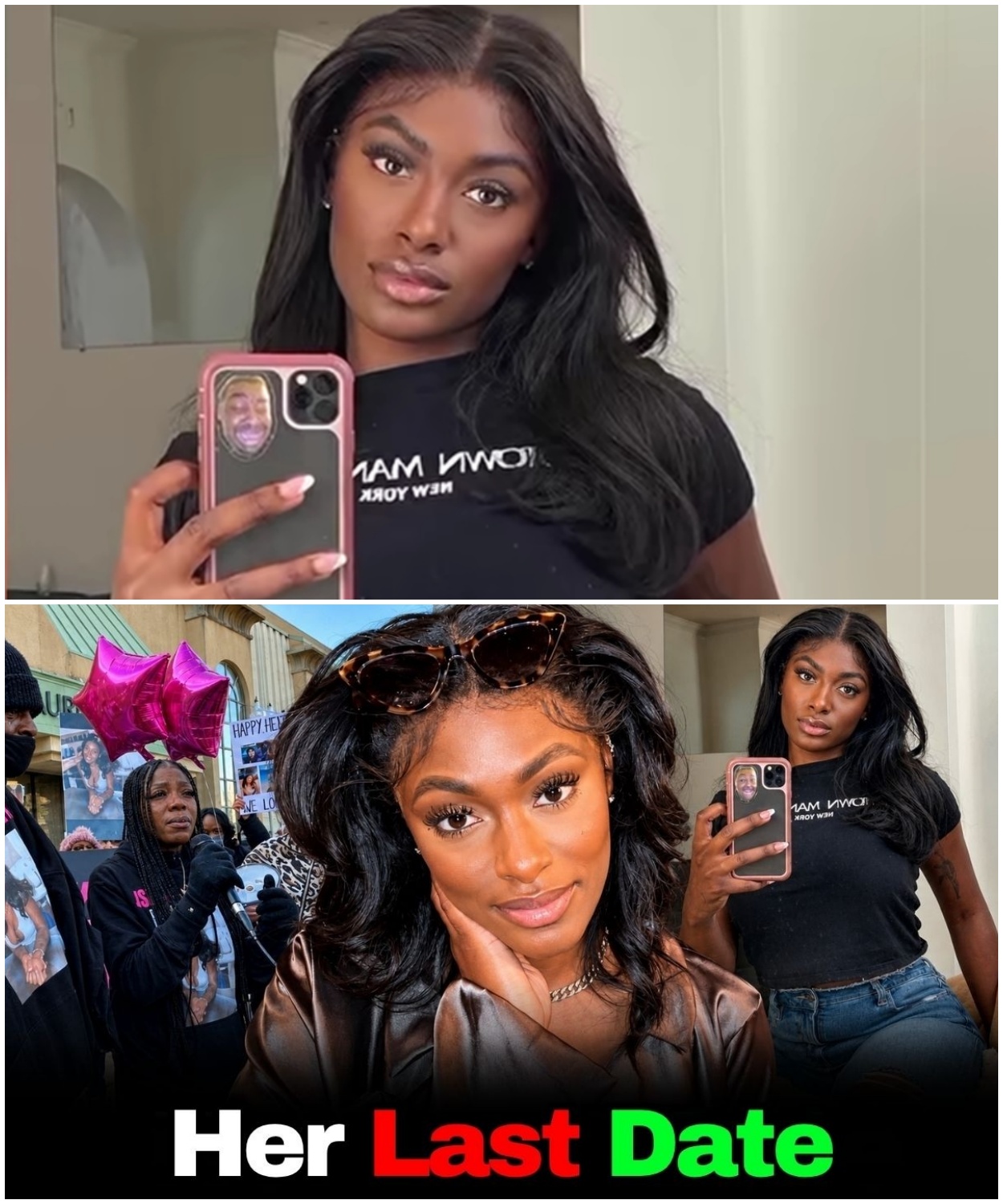
Before going any further into what happened, it’s worth sitting with who Lauren actually was — not the headline version, not the hashtag, but the real person.
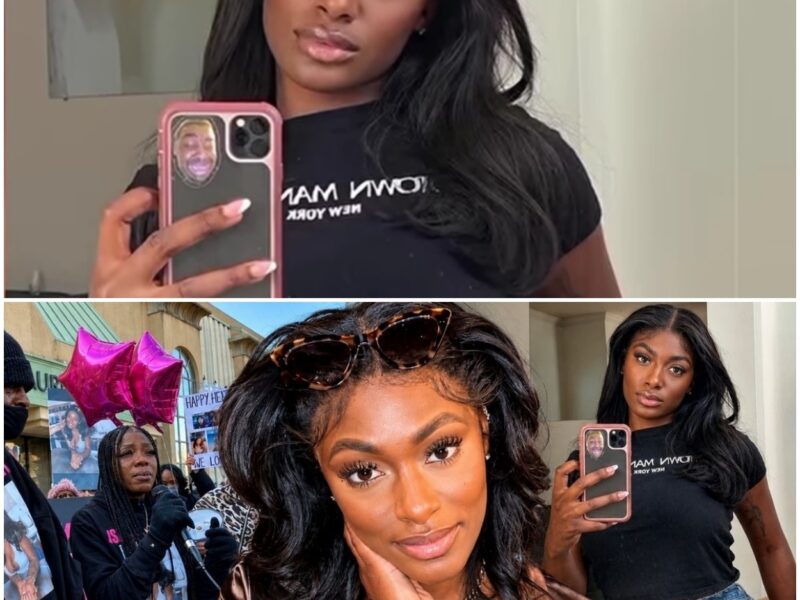
Lauren Smith-Fields was 23, out of Bridgeport, Connecticut. She’d run track in high school. She was still in school, working toward a career as a chiropractor, and on top of that, she ran her own home-based beauty business — the kind built one client at a time, by word of mouth, working weekends while everyone else slept in.
She had a real online presence too — funny on camera, natural, the kind of person people followed because she felt like someone they actually knew rather than someone performing for an algorithm. And she was close with her family. The family’s attorney described it on camera, months before any of this reached a courtroom: “Extremely, extremely close. She’s very, very close with her brothers, and everything that she did, she did with the family. She traveled with the family. She spent time every single morning at LA Fitness gym with her mother.”
Her mother, Chantel Fields, described her this way: “The biggest misconception is that my daughter was on drugs. She was not on drugs. Lauren worked out every day. She was on a plant-based diet. She went to college. She had her own business in her home… There was no drugs. She was not on drugs at all. She had her whole life ahead of her.” Asked about her daughter’s personality, Chantel said: “My daughter was funny. When she walks into a room, she lit up the whole room. She loves doing makeup. She loves hanging around with her friends. She loves family. She was very family-oriented… Even though I work so late at night, sometimes she’d just come over and be like, ‘Mom, let me just grab your laundry and wash them for you.'”
That’s not a headline. That’s not a hashtag. That’s just a daughter.
Chapter Four: The Medical Examiner’s Finding
The Office of the Chief Medical Examiner ruled that Lauren died of acute intoxication — the combined effects of four substances in her system at once: fentanyl, promethazine, hydroxyzine, and alcohol. Her manner of death was ruled accidental.
The man who’d been with her told police they’d been drinking tequila shots and she got sick. He carried her to her bedroom, lay down next to her, and fell asleep. At 6:30 a.m., he said he woke up to find her not breathing, with blood coming from her right nostril, and called 911.
But Lauren’s family insisted the story didn’t add up. They had said from the beginning that she didn’t use drugs. National news coverage weeks later was still describing her as “a seemingly healthy young woman” — that was the entire mystery, sitting right there in one sentence, and it took national coverage before anyone locally acted like it actually was one.
The family called the detectives’ handling of the case “racially insensitive” and alleged that Lauren’s civil rights had been violated.
Chapter Five: Public Pressure Forces Action
Only after weeks of sustained public pressure, and only after the medical examiner’s ruling came back, did Bridgeport police finally open an active criminal investigation. The federal Drug Enforcement Administration was brought in to assist. The police chief said the department was “refocusing our attention and efforts to the factors that led to her untimely death.”
Lauren’s family continued to say police never even notified them of her death — they learned through her landlord. Chantel Fields described going to her daughter’s apartment after calls and texts went unanswered: “There’s a note on the door saying, if you’re looking for Lauren, call this number. I called the number. No one picked up.” It was the landlord, not the Bridgeport Police Department, who eventually told her and her son that Lauren was dead.
Attorney Crossland laid out a specific legal theory on camera: if the man had in fact brought those drugs into the apartment and given them to Lauren, he could be charged with distribution under the state’s felony drug statute — a charge carrying up to 15 years — and if her death resulted from that, it could constitute manslaughter connected directly to the sale.
Chapter Six: The Gabby Petito Comparison
Attorney Crossland drew a comparison that was pointed and, to some, controversial: he compared Lauren’s case to that of Gabby Petito — a young white woman who went missing that same year and received national search efforts, sustained media coverage, and a documentary series.
“In this particular case, a 23-year-old Black, healthy woman, who allegedly met this man on Bumble, was reported dead by the man — an older white gentleman. With that being said, the police took a statement from this gentleman and let him go. They didn’t do any investigation.” He argued this reflected a broader pattern of disparate treatment — not confined to Bridgeport, but systemic across the country — pointing to how the Supreme Court examines patterns of treatment nationally rather than within a single city’s boundaries.
Cardi B was among the public figures who spoke out about the gap in attention between the two cases.
Chapter Seven: Two Deaths, One Failure
The same day Lauren was found dead, another woman — Brenda Lee Rawls, in her 50s — was also found dead in Bridgeport, in the same precinct. The medical examiner ruled Rawls’s death was from natural causes — cardiovascular disease with diabetes as a contributing factor — not a suspicious death in the way Lauren’s was. But the two cases shared one thing in common: Rawls’s family also said police never notified them of her death. Her sister said: “We had to also search for our sister. We found her two days later, at the coroner’s office.”
After sustained public pressure, Bridgeport Mayor Joe Ganim stood before cameras and announced that two detectives connected to both cases — Detective Lunis and Detective Cronin — were being placed on administrative leave, citing “a lack of sensitivity to the public and failure to follow police procedure.” He called it “an unacceptable failure.” An officer who had overseen the handling of both cases had also already retired.
Suspension, though, is not termination. A couple of years later, an arbitrator reinstated at least one of the two detectives.
Chapter Eight: Lauren’s Law
Six months after Lauren’s death, her family held a march in Bridgeport calling for legislation that came to be known as “Lauren’s Law” — requiring Connecticut law enforcement agencies to notify families of a death in a timely manner.
Lauren’s father and Brenda Lee Rawls’s sister testified back to back before state lawmakers, describing nearly identical experiences of two separate tragedies handled by the exact same failure. The bill passed unanimously.
Chapter Nine: The Lawsuit and the $30,000
In December 2023, two years after Lauren’s death, her family filed a federal civil rights lawsuit against the City of Bridgeport — naming not only the police department but also Bumble, the app that had put the man in her apartment in the first place. They sought $30 million.
In February 2025, a federal judge dismissed the civil rights claims, ruling that there wasn’t sufficient evidence that race had been a determining factor in how the case was handled. In April of that year, the City of Bridgeport agreed to settle the remaining claim — for $30,000.
Not $30 million. $30,000 — a figure small enough to feel almost symbolic of the indifference the family says they faced throughout.
To this day, Matthew LaFountain — the last person to see Lauren alive — has never been charged with any crime.
Chapter Ten: What Social Media Did
It was TikTok, not the Bridgeport Police Department, that ultimately took this story national. The hashtag #JusticeForLaurenSmithFields drew more than 4.2 million views — more attention than any official police investigation devoted to the case in its first month.
Marches, viral attention, and sustained public pressure eventually forced the city to act — belatedly, and incompletely.
Epilogue
This story shouldn’t be remembered only through settlement figures or the names of detectives. It should be remembered through the image of a daughter who did her mother’s laundry after a long shift, who lit up a room when she walked into it, who never once let being 23 stop her from building something of her own.
That’s what Bridgeport failed. Not a headline. Her.
(Disclaimer: This story is entirely fictional and created for entertainment purposes only. It does not represent any organization or individual, nor does it encourage inappropriate behavior. The content was generated with AI assistance.)